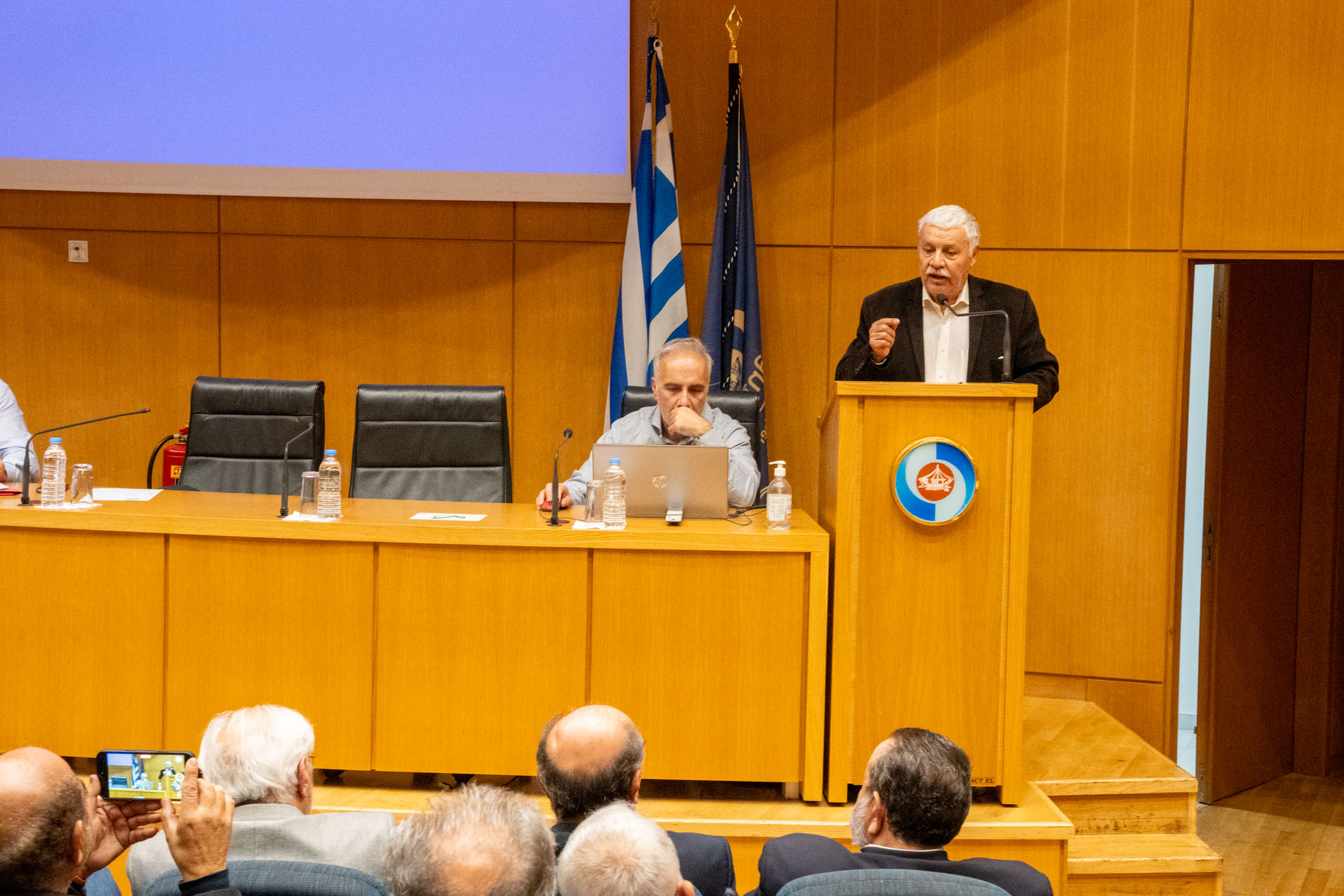
“I want to mention two words related to Energy. These words are Right and Privilege. While all citizens have a right to energy, at the same time, a few have a privilege to energy.
We, as Minoan Energy, claim our Right to Energy, which is, after all, institutionalized in the European Union. We do not want Privileges. We do not want funding, we do not want anyone’s support. We simply want not to be obstructed. But because we *are* being obstructed, we have reached the point where today we must claim a share of Crete’s Energy Space.”
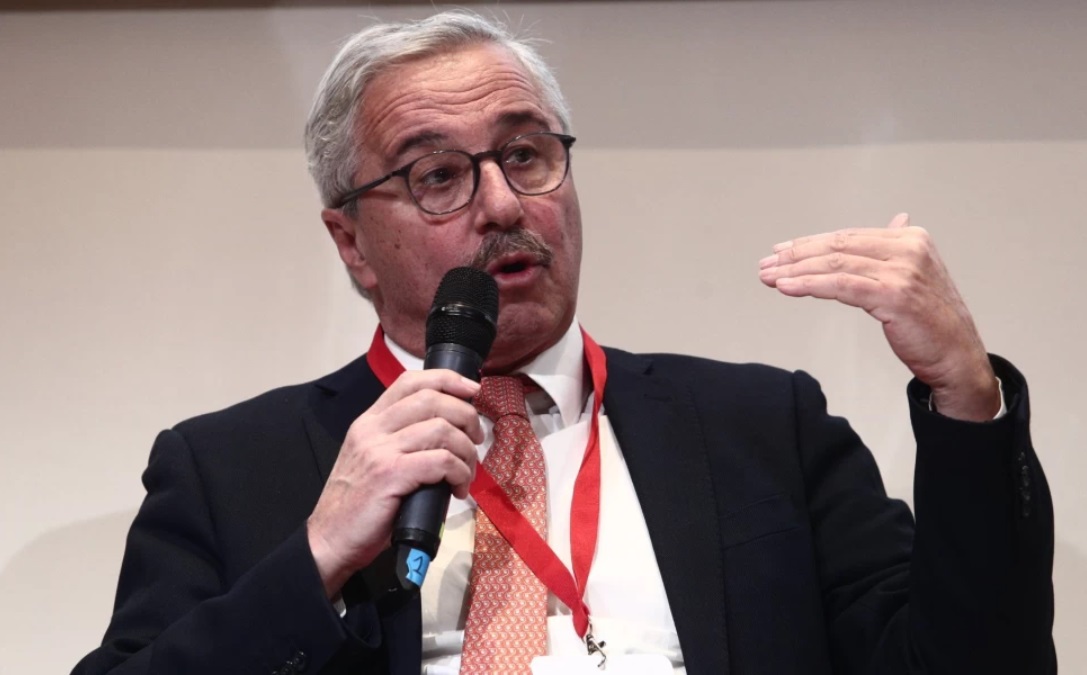
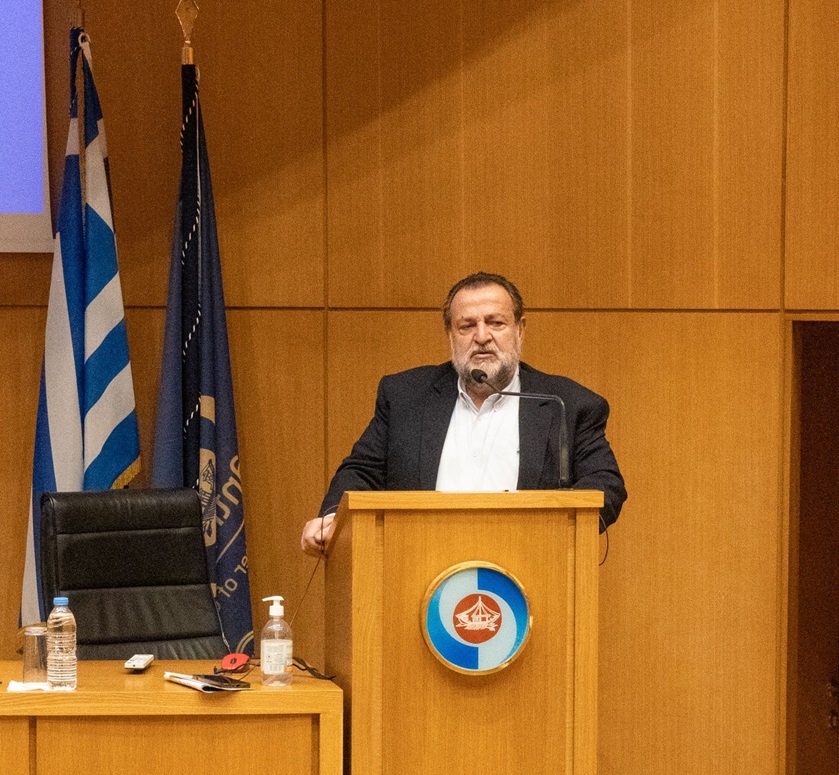
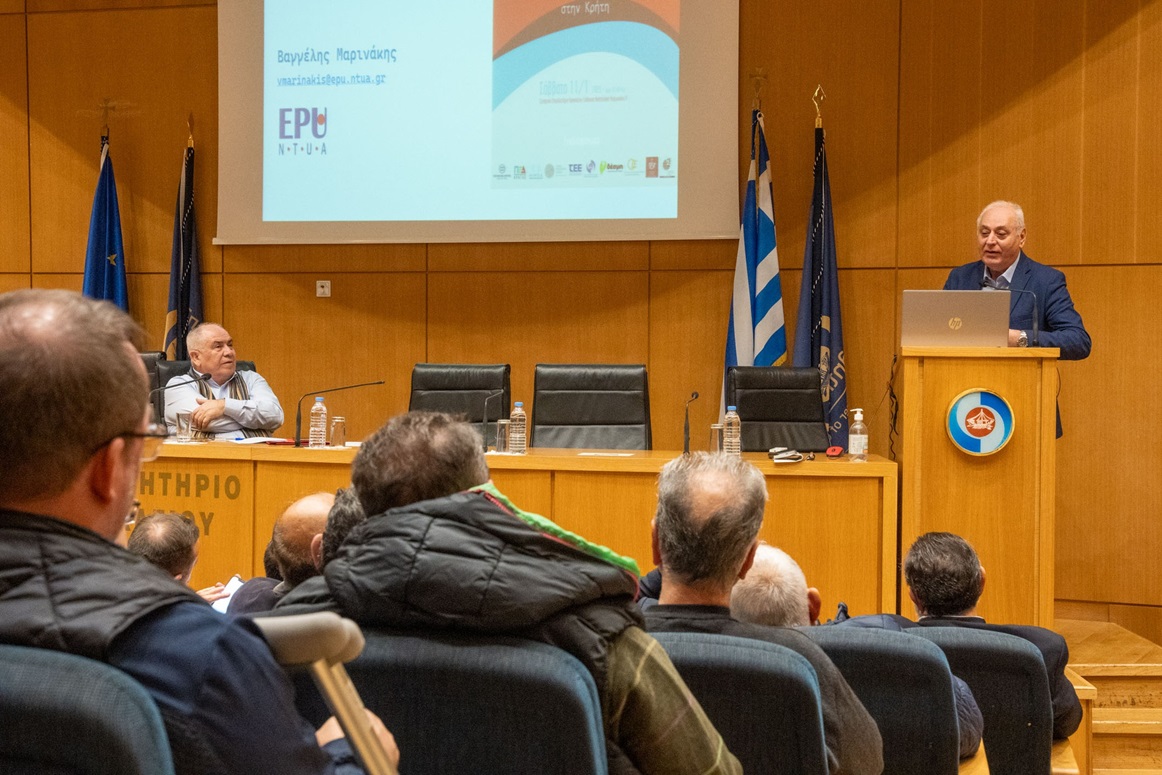
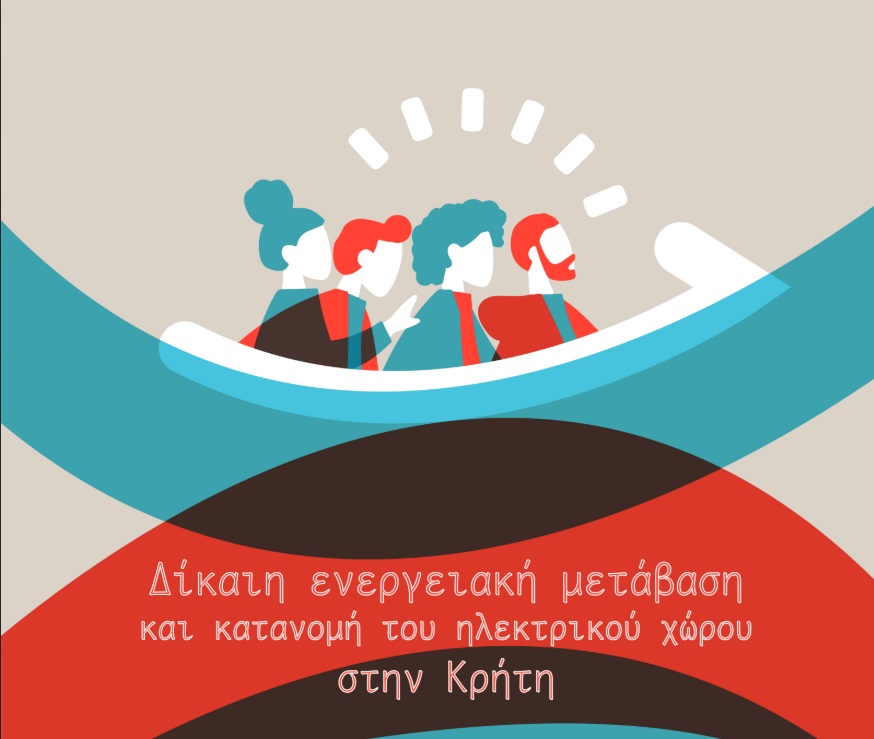
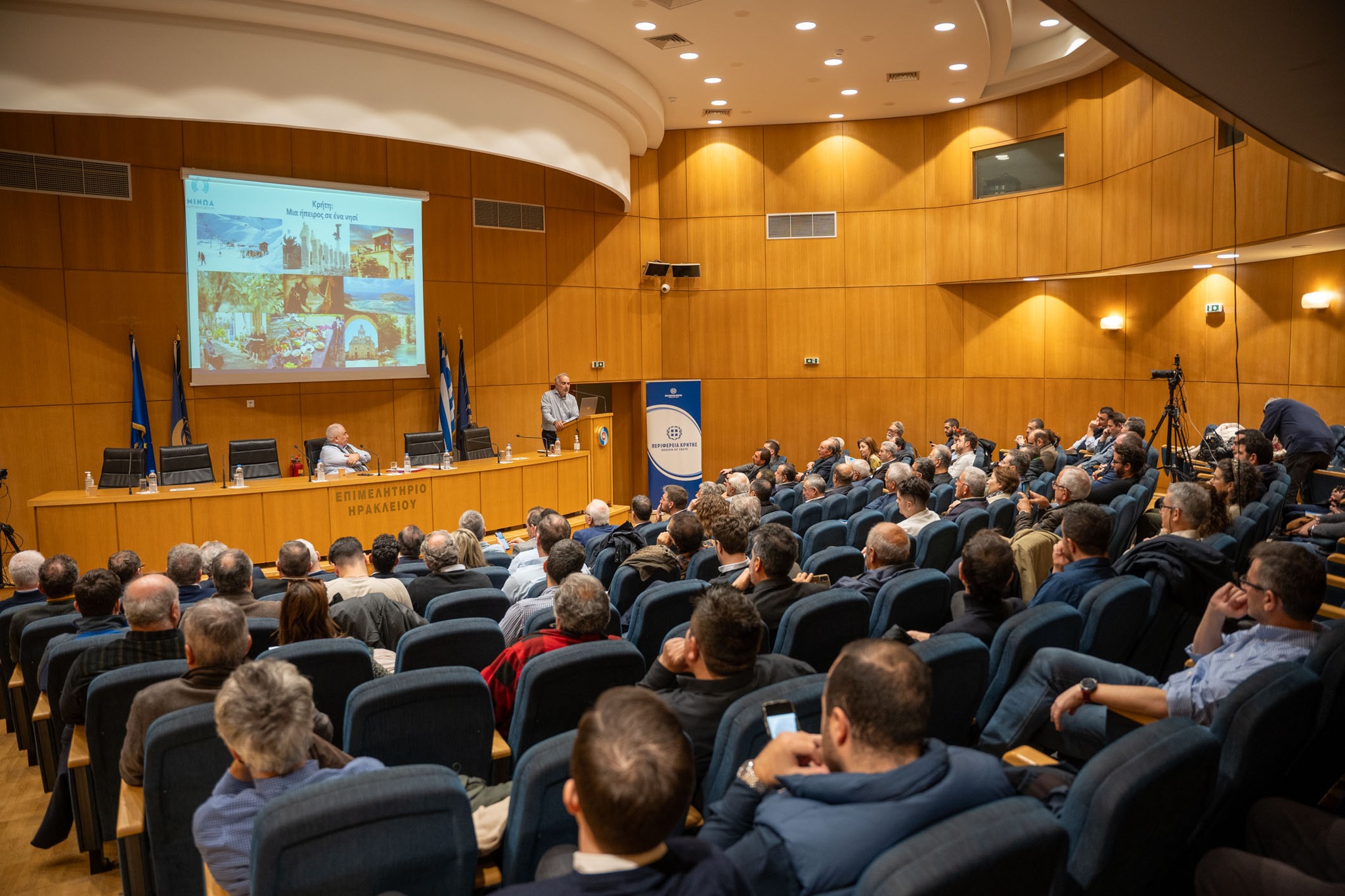
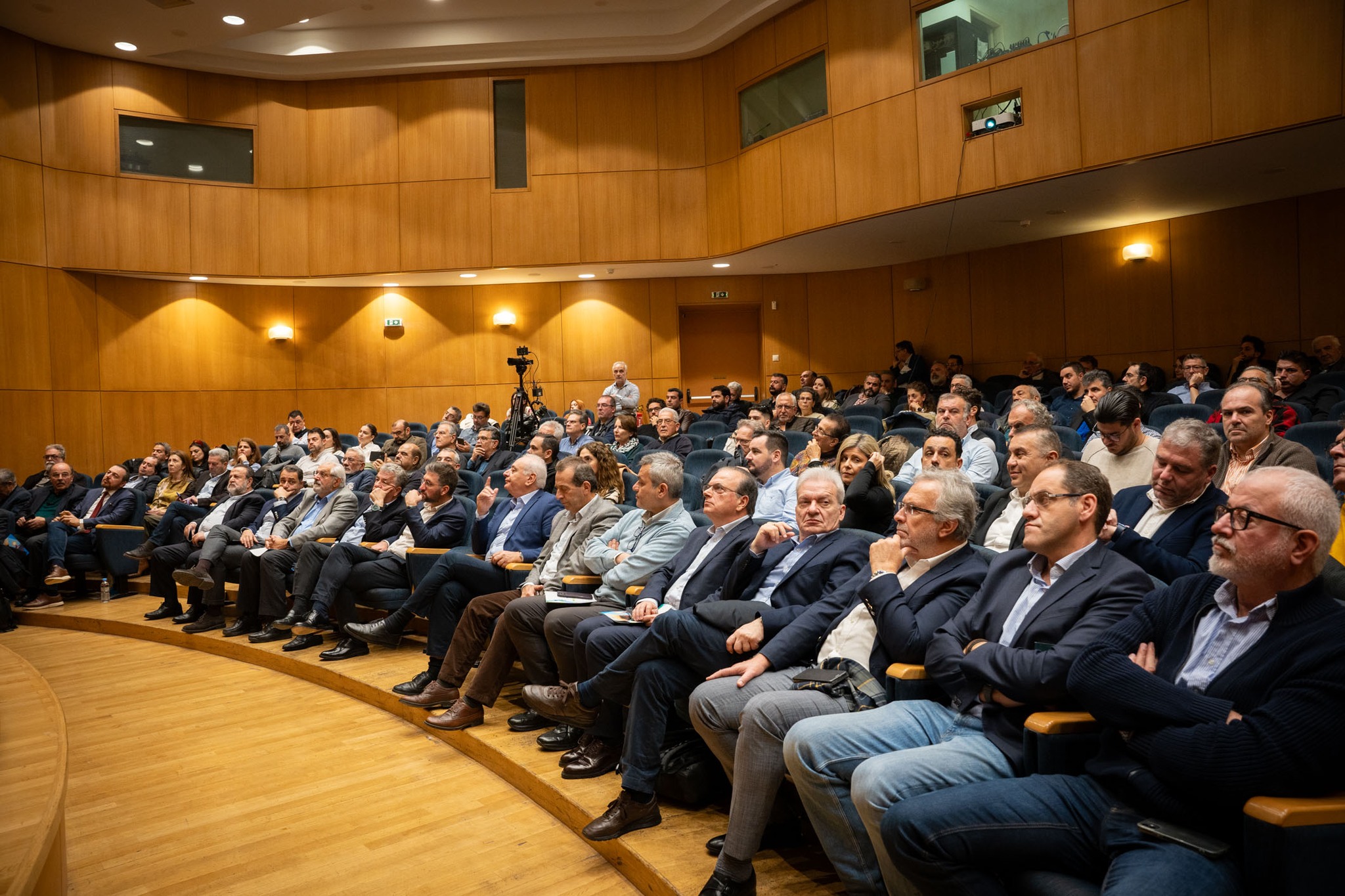
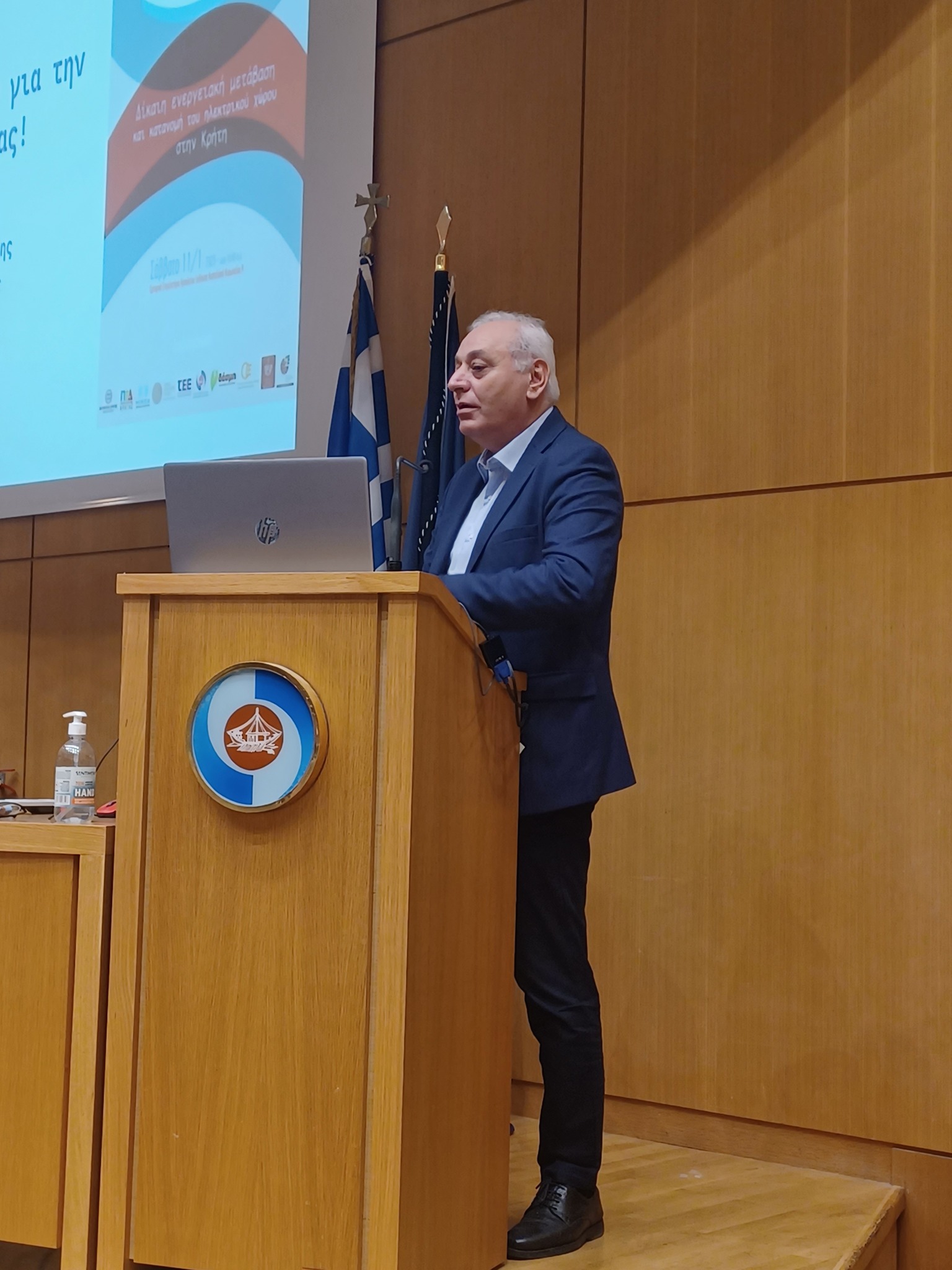
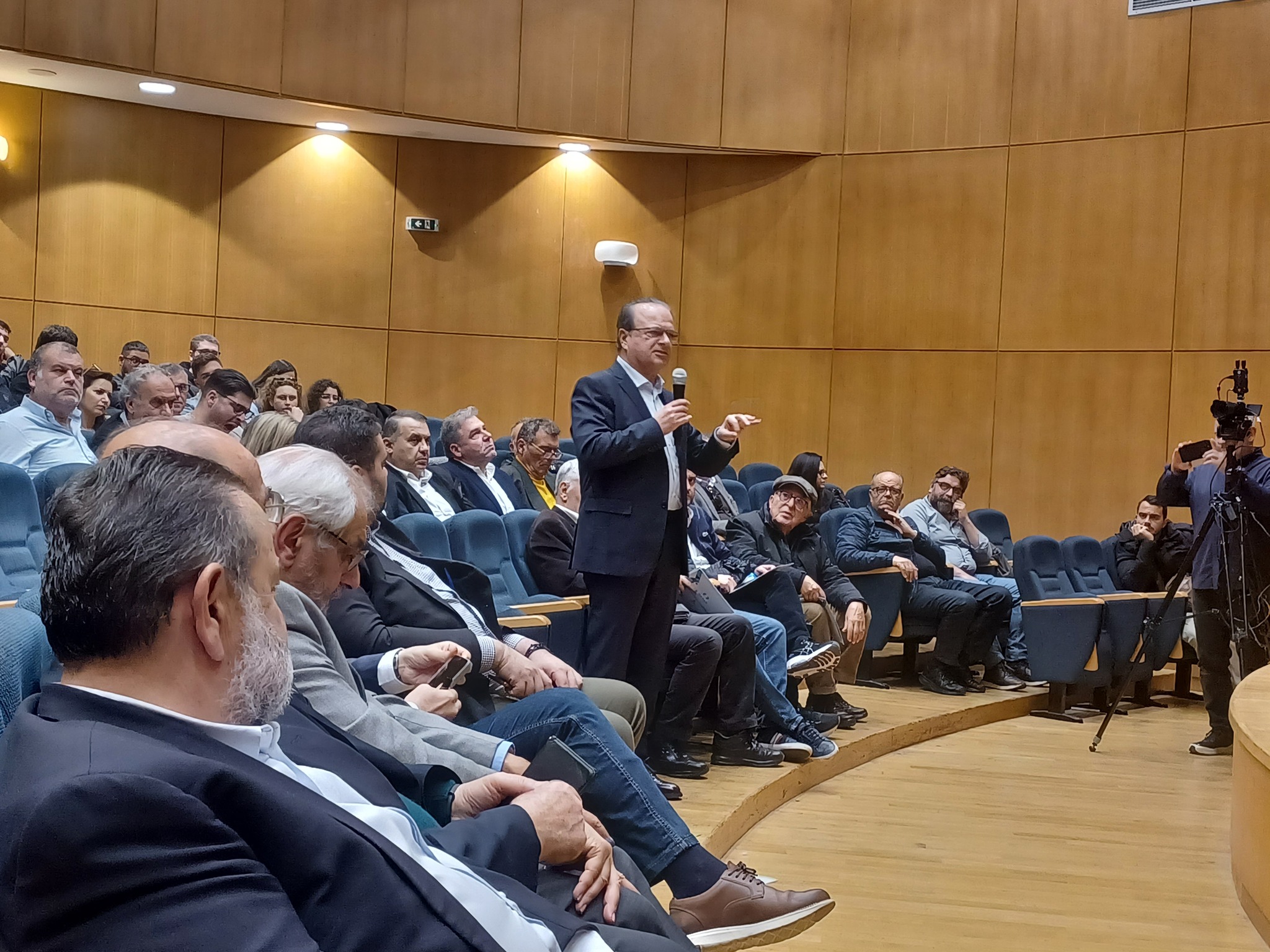
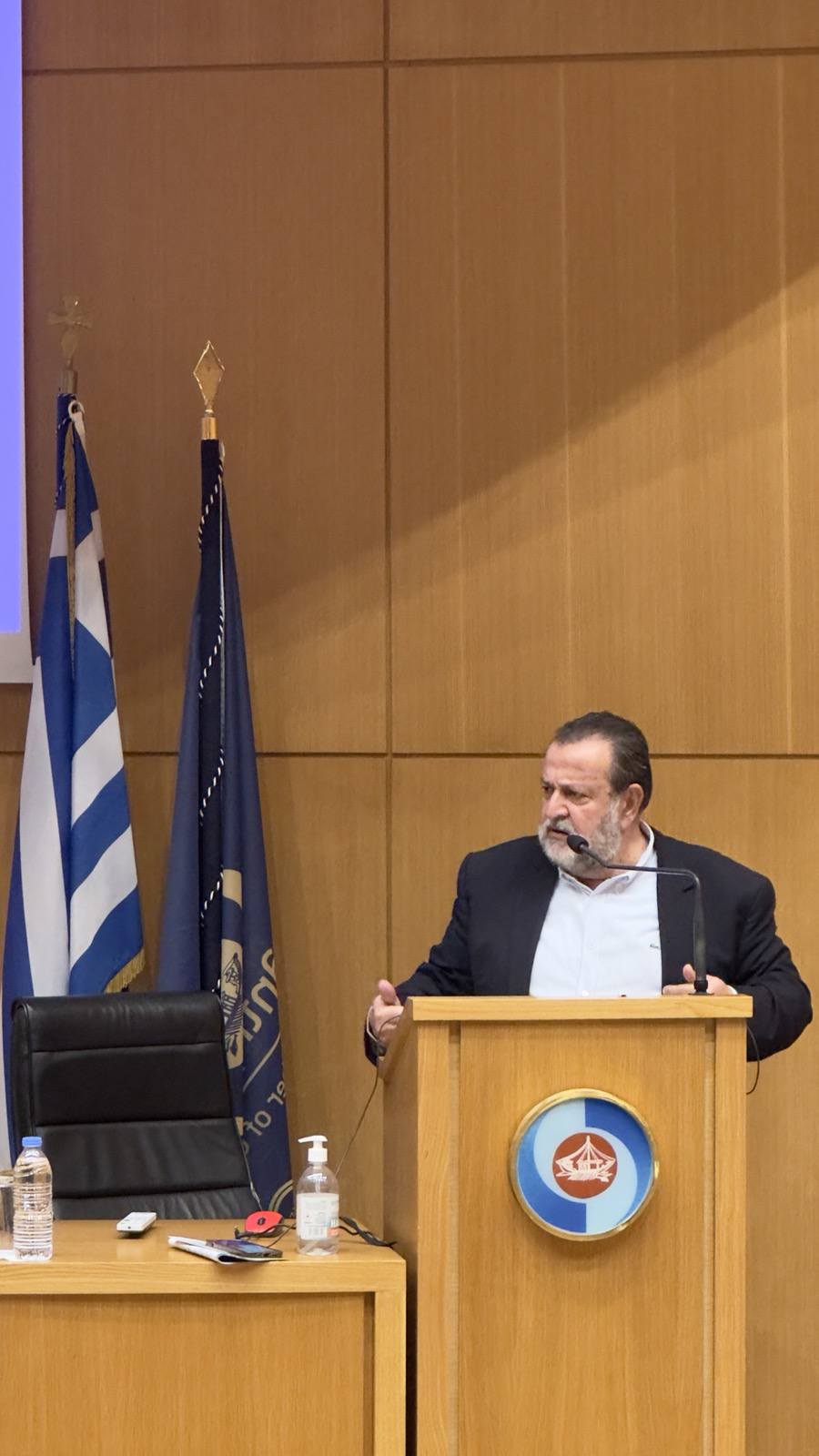
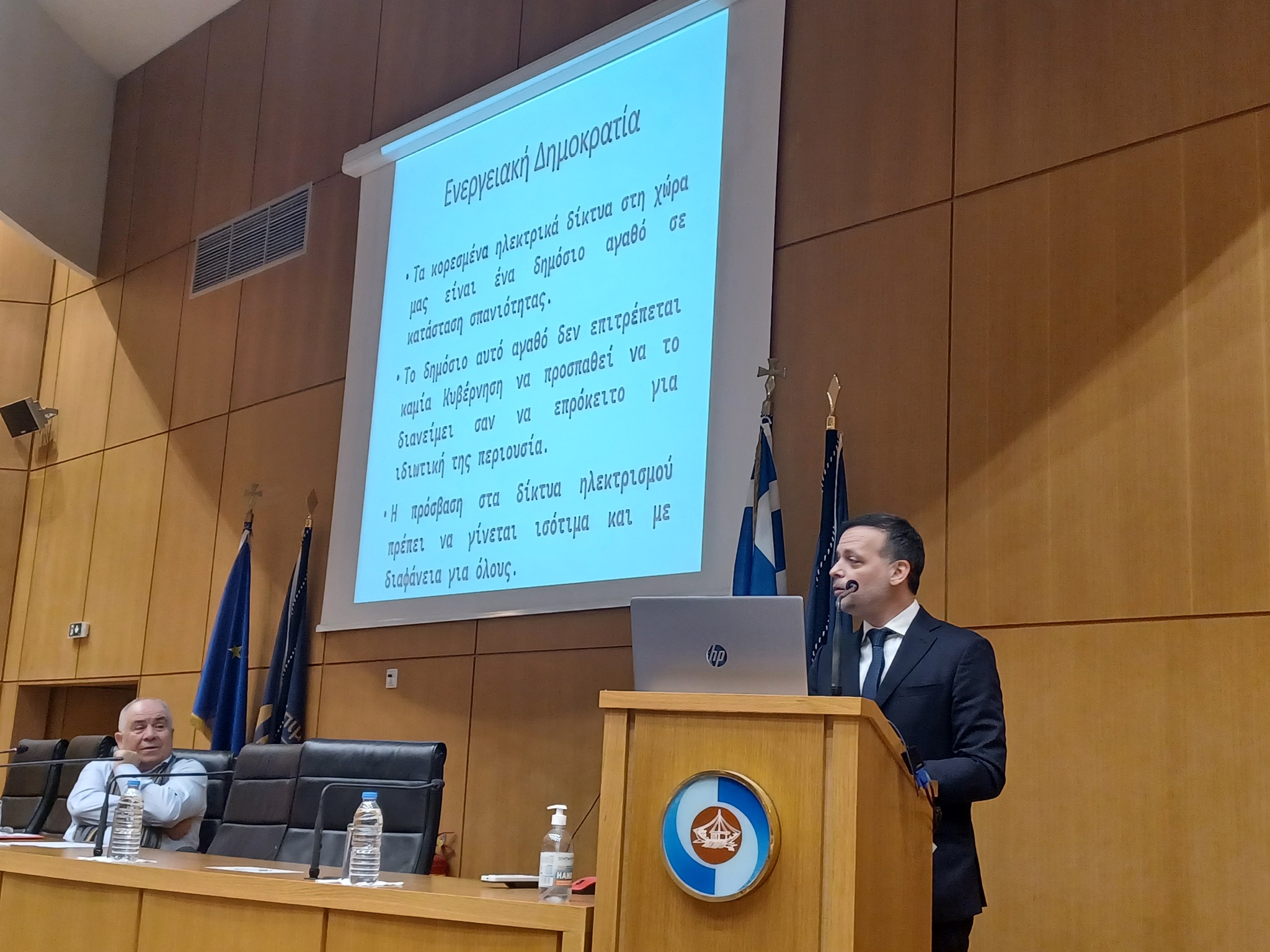
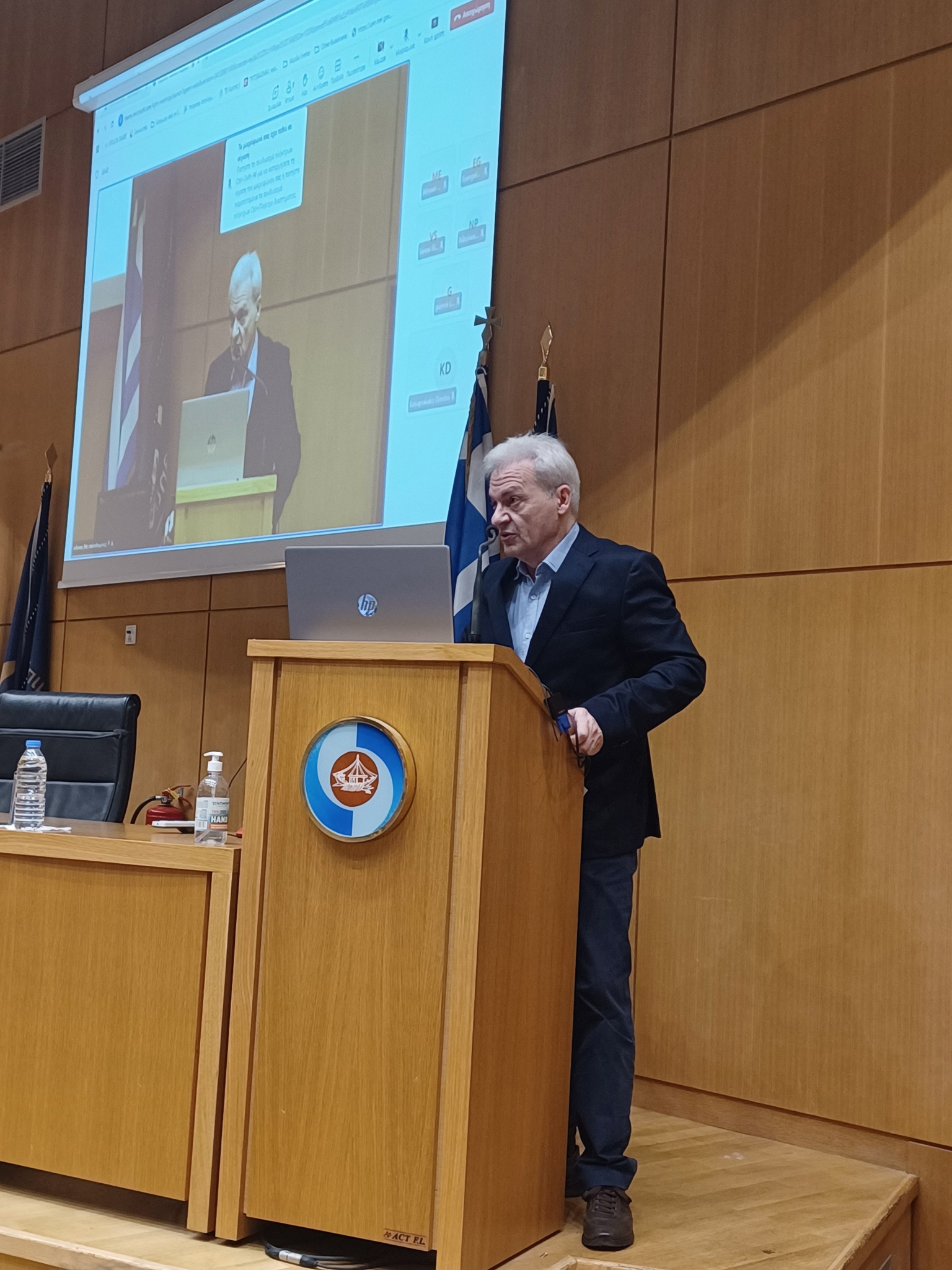
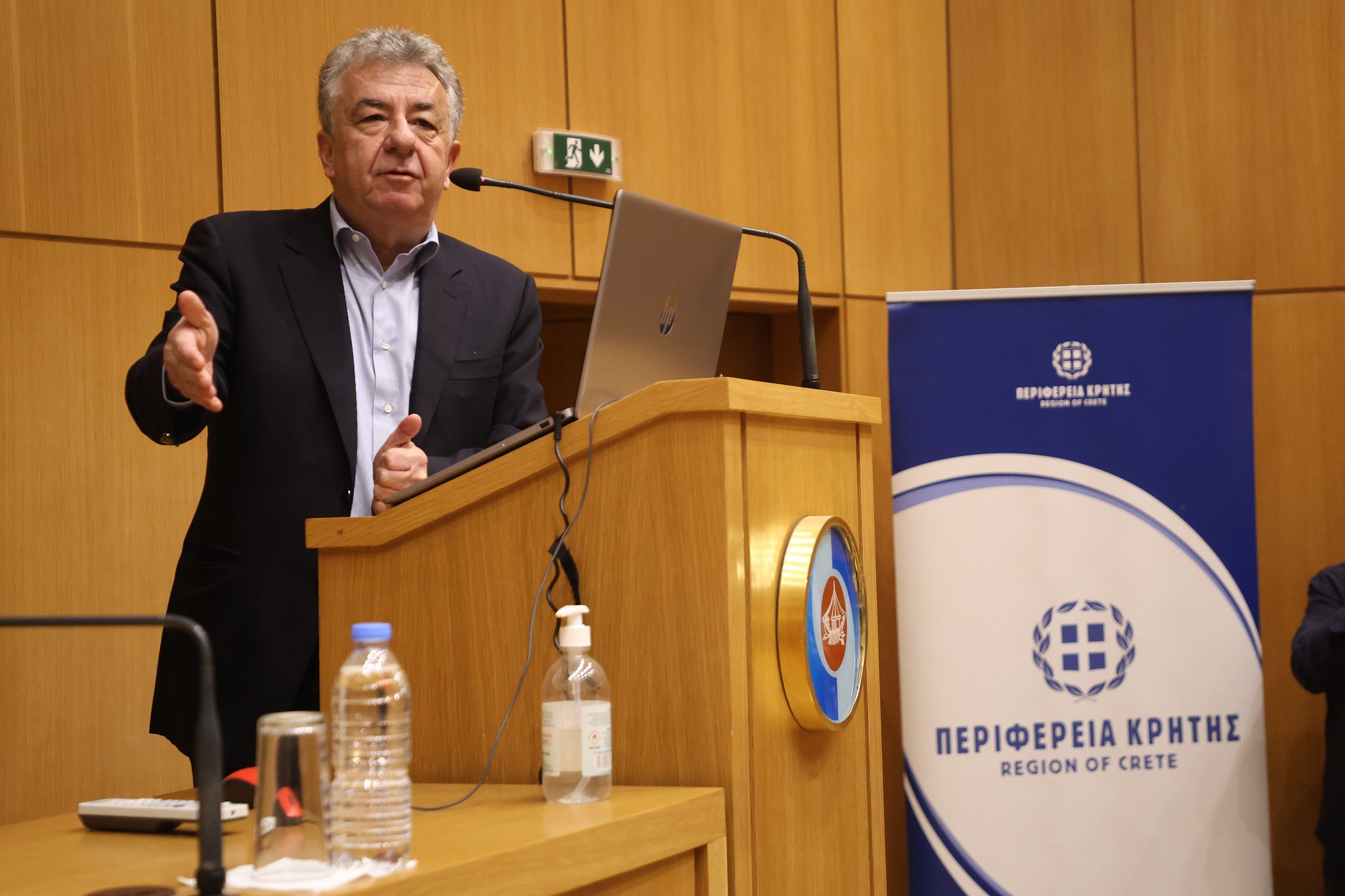
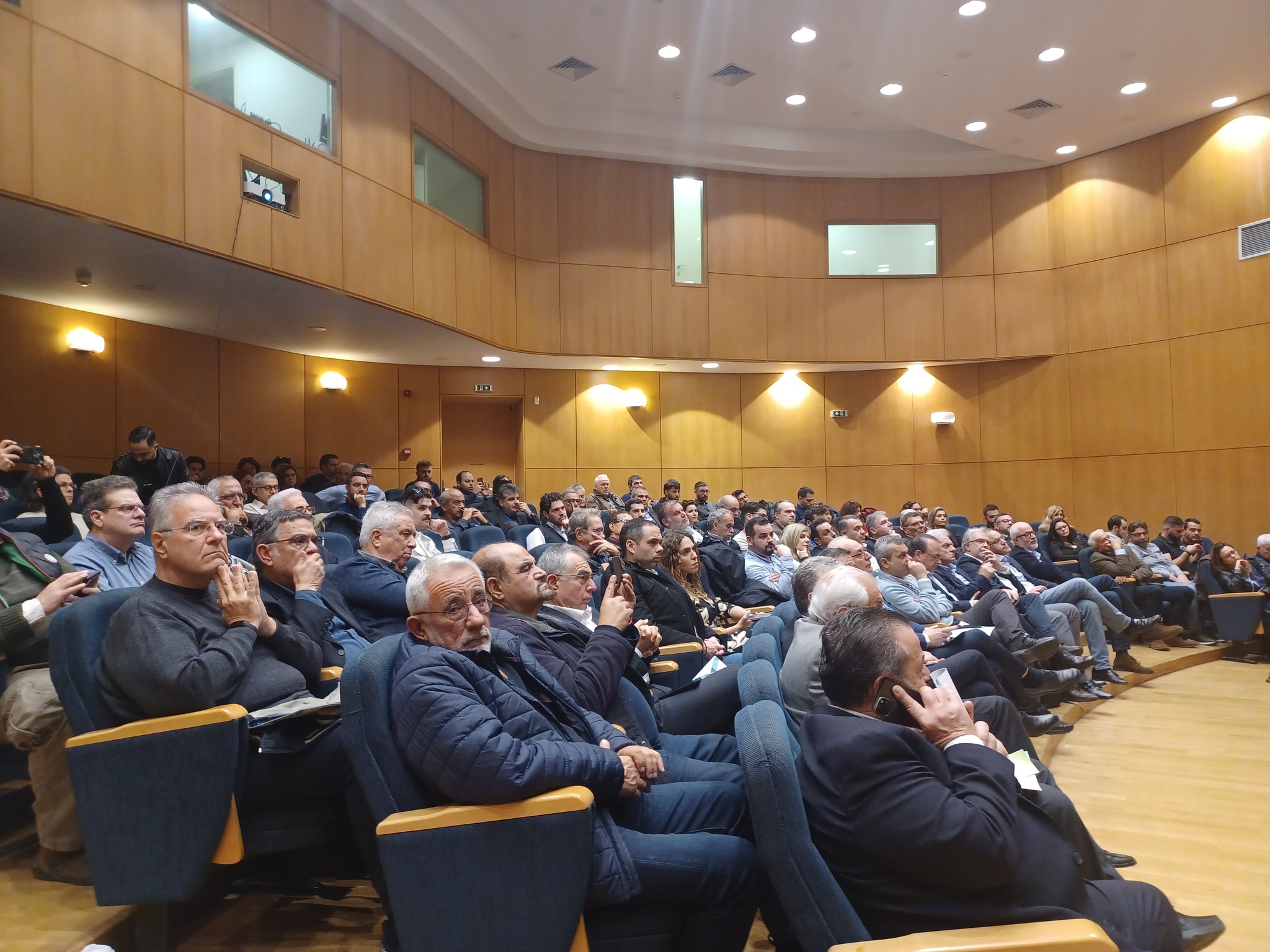
With these very accurate words by Charalambos Giannopoulos, which encapsulate the problematic situation in Crete’s current energy landscape, the highly successful Conference on the Just Energy Transition and the Allocation of Energy Space in Crete concluded. The event took place on Saturday, January 11, at the Heraklion Chamber of Commerce and Industry, with a large number of participants, including representatives of local and public administration, scientists, professionals, and institutions of Crete.
Co-organizers of the conference—held as a continuation of the one organized in March 2024 and implemented within the framework of the European project WENDY, in which our Community participates—were the Region of Crete, the Regional Union of Municipalities of Crete, the Coalition of Energy Communities, the Minoan Energy Community, the Orthodox Academy, and all Chambers of Crete.
The speakers’ statements clearly outlined the problem from the very beginning and highlighted the difficulties on the island’s path toward energy transition.
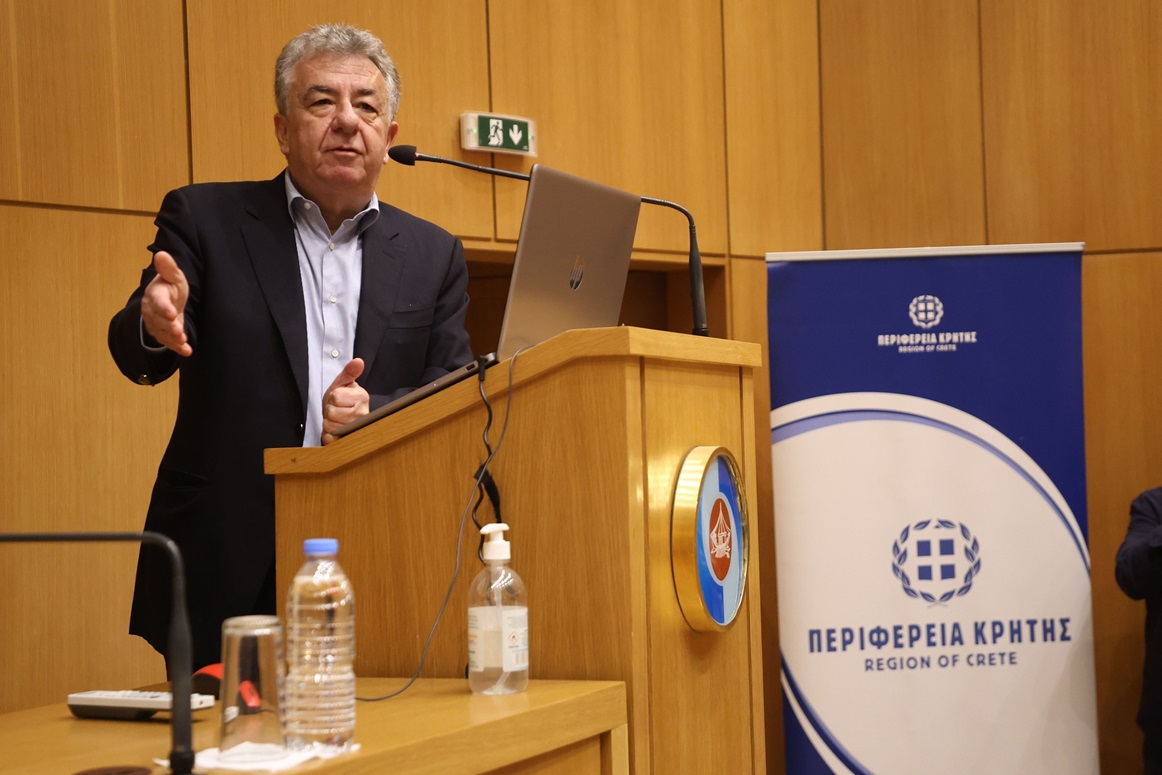
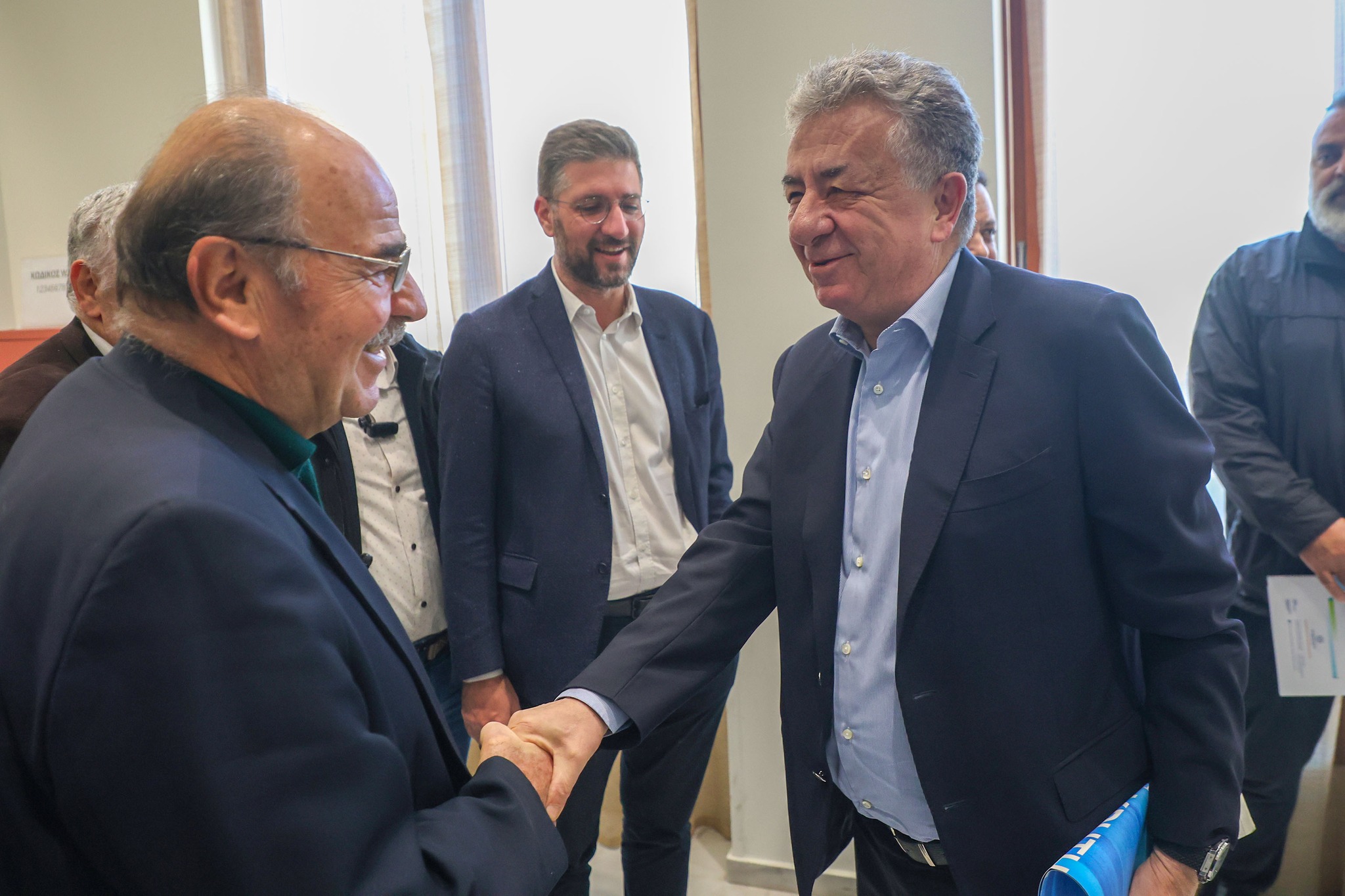
More specifically, the Regional Governor of Crete, Mr. Arnaoutakis, after praising the example of Minoan Energy and criticizing the absence of a representative from the Ministry of Environment and Energy, committed that “we will not allow Crete to be deprived of what it is entitled to.”
Mr. Kalokairinos, Mayor of Heraklion, noted that although Energy Democracy is institutionally established at the European level, in an EU country like Greece it does not apply, as conditions of energy oligarchy have been created. Therefore, a crucial question arises for local government leaders: how they position themselves toward regulations and legislation that allocate energy space to oligopolies.
Taking it a step further, Mr. Giorgos Marinakis, Mayor of Rethymno and President of the Regional Union of Municipalities of Crete, spoke of the cartelization of energy and described as deeply political the decision regarding what will ultimately happen with the two large private companies that, through the licenses they secured, have occupied the island’s energy space.
Mr. Doukas, Mayor of Athens and professor at NTUA, emphasized that electrical grids are a public good, as they were built with the money of the Greek people, and therefore everyone should be able to use them equally and transparently. He also announced that he will propose at the next municipal council meeting that the Municipality of Athens join the Minoan Energy Community, in order to provide free energy to 20 vulnerable households in the capital, as well as to symbolically strengthen the institution of broad-based energy communities and the claims they pursue.
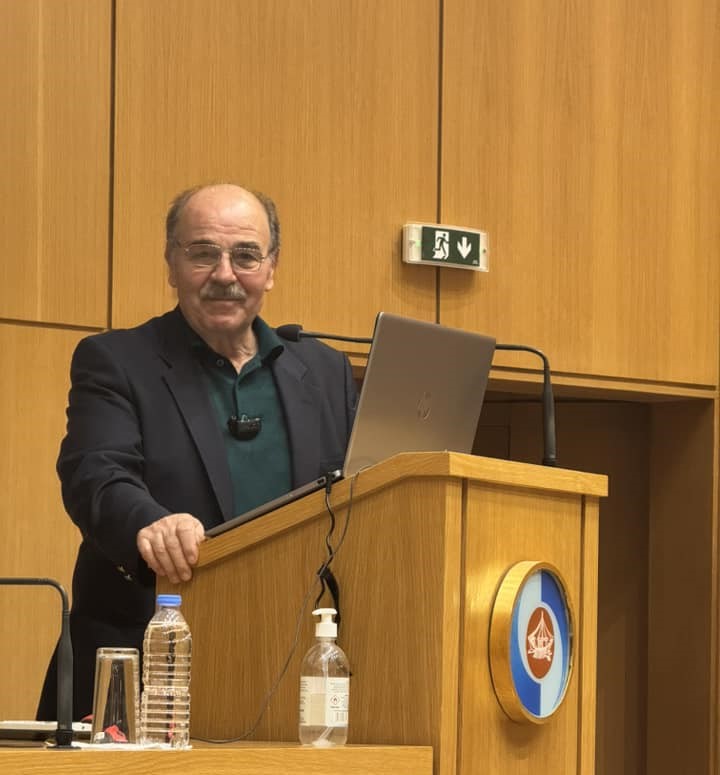
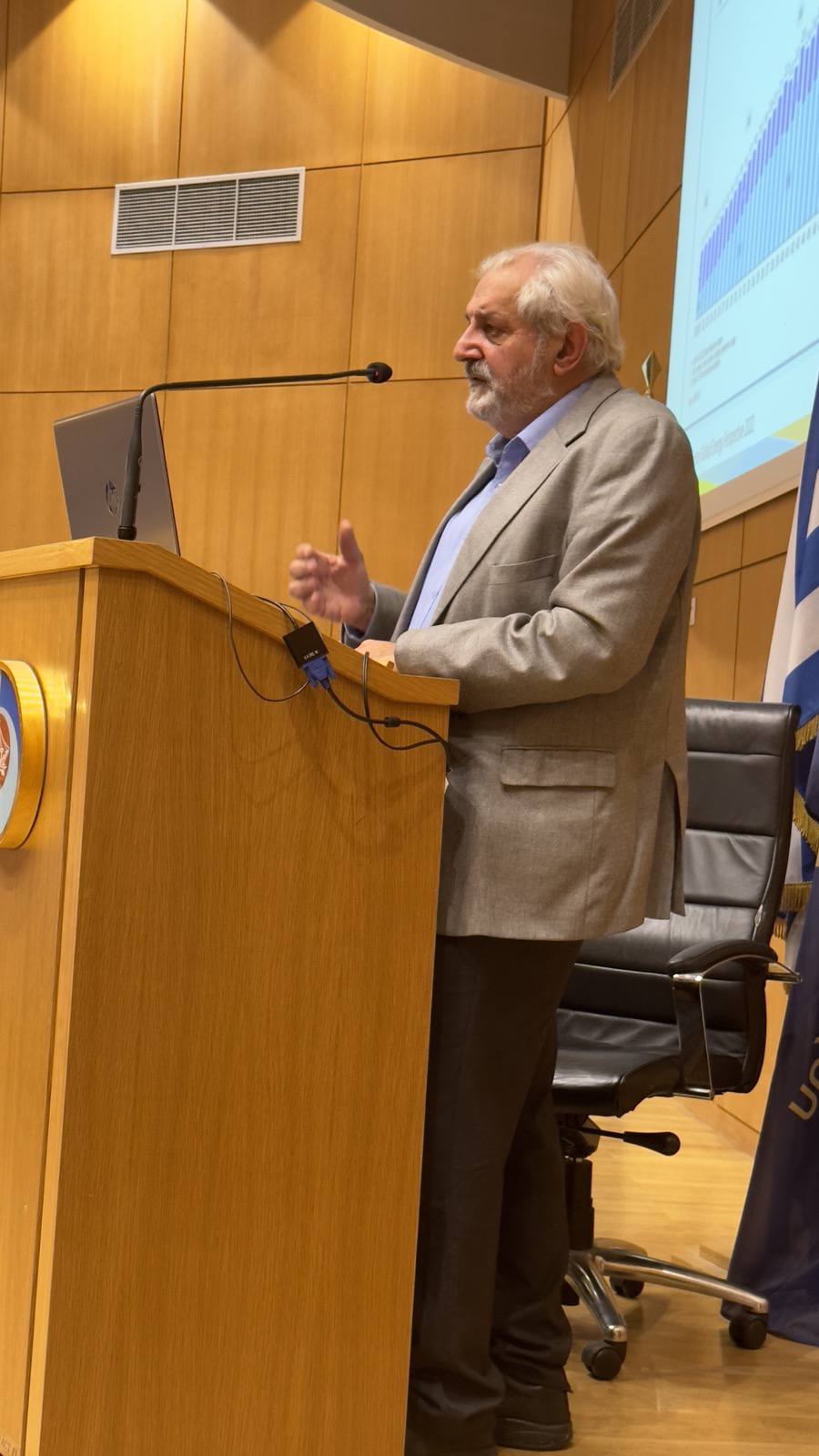
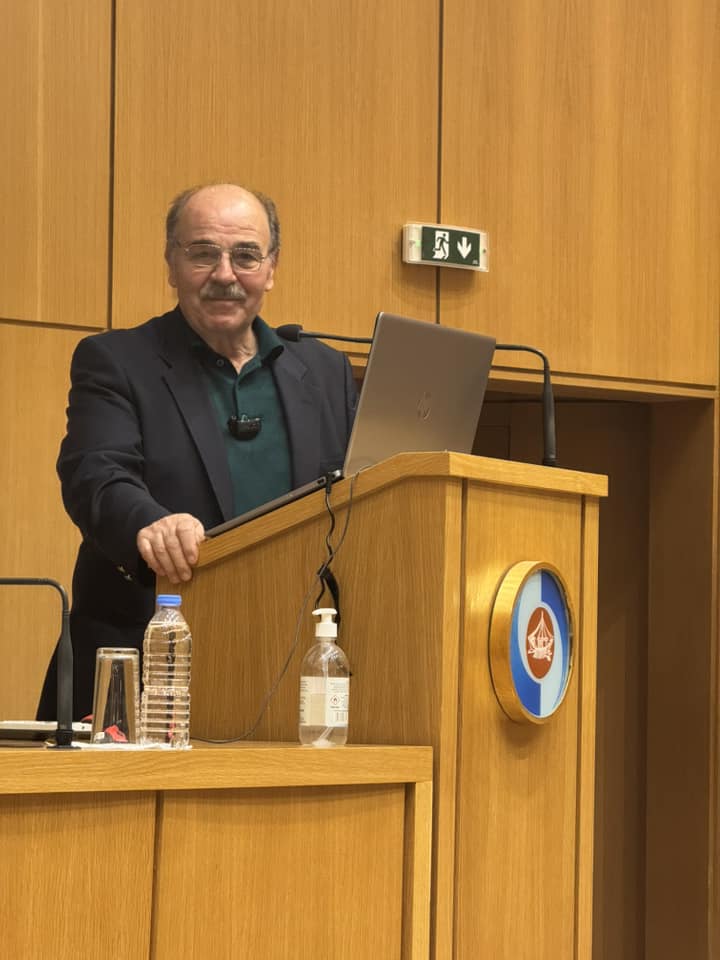
Next, scientists from the energy sector took the floor. Professor Katsaprakakis, of the Department of Mechanical Engineering at the Mediterranean University and member of Minoan Energy, first presented examples from other European countries which, since the 1990s, through political decisions, implemented Energy Democracy via Energy Communities. He then referred to the provocative legislative regulation that abolishes any notion of meritocracy and equality before the law, granting the right to exploit Crete’s energy space to two large private companies, despite their failure to fulfill their obligation to complete the island’s electrical interconnection with mainland Greece. Furthermore, through the new siting of wind turbines included in the design of these two licenses, the installation of machines of much greater capacity—and therefore much larger size—than the original ones is foreseen, with severe impacts on the landscape due to the required infrastructure works. He stressed the need for proper planning of wind energy projects and explained how the occupation of energy space and the creation of energy monopolies will lead to energy and economic dependence and high energy prices. At the same time, the impacts on the natural and human environment will gradually degrade the landscape, reduce the rural population, and ultimately lead to its decline. Finally, he countered the Ministry’s argument that net metering distorts the market, explaining its necessity in addressing energy poverty.
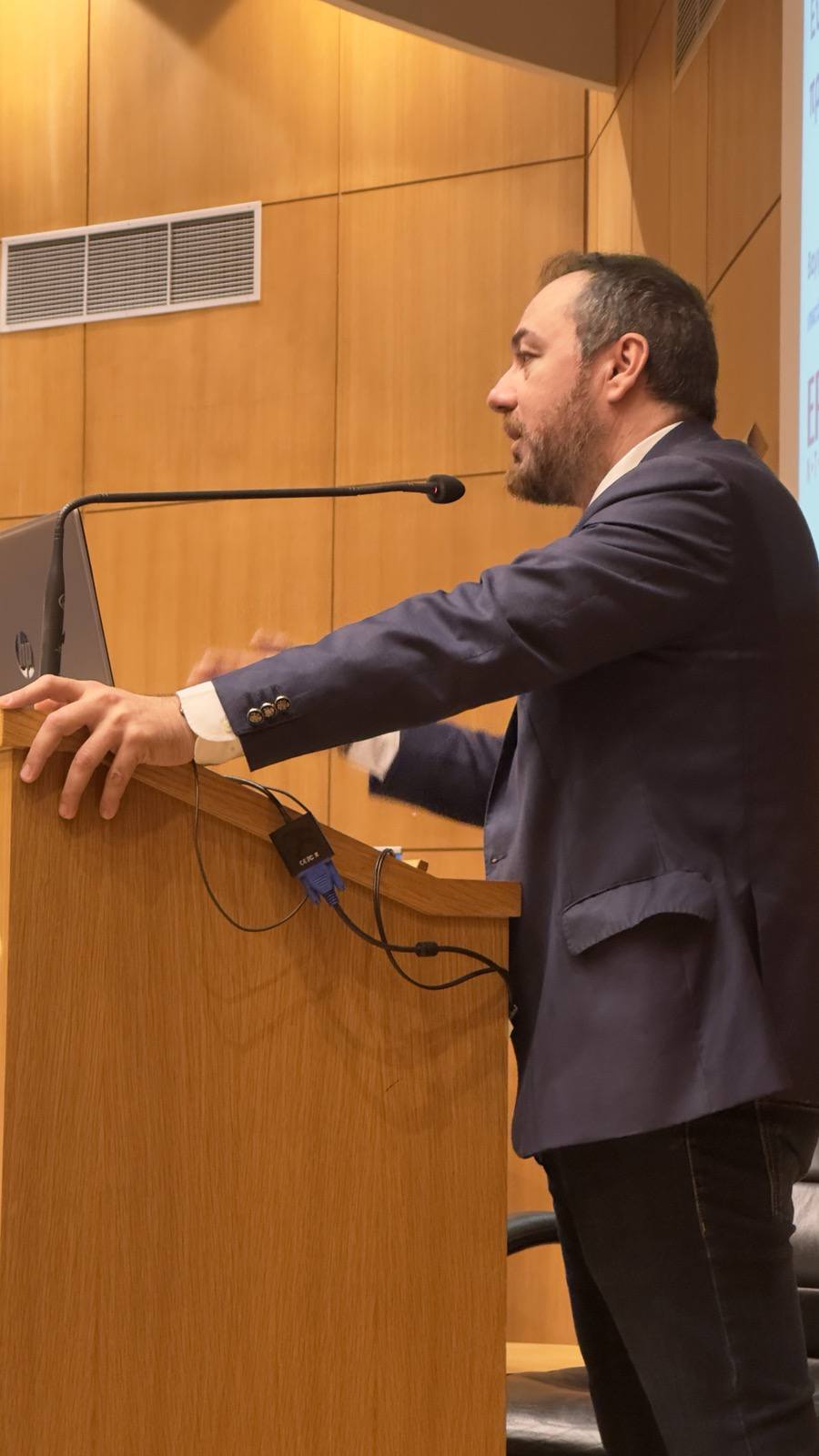
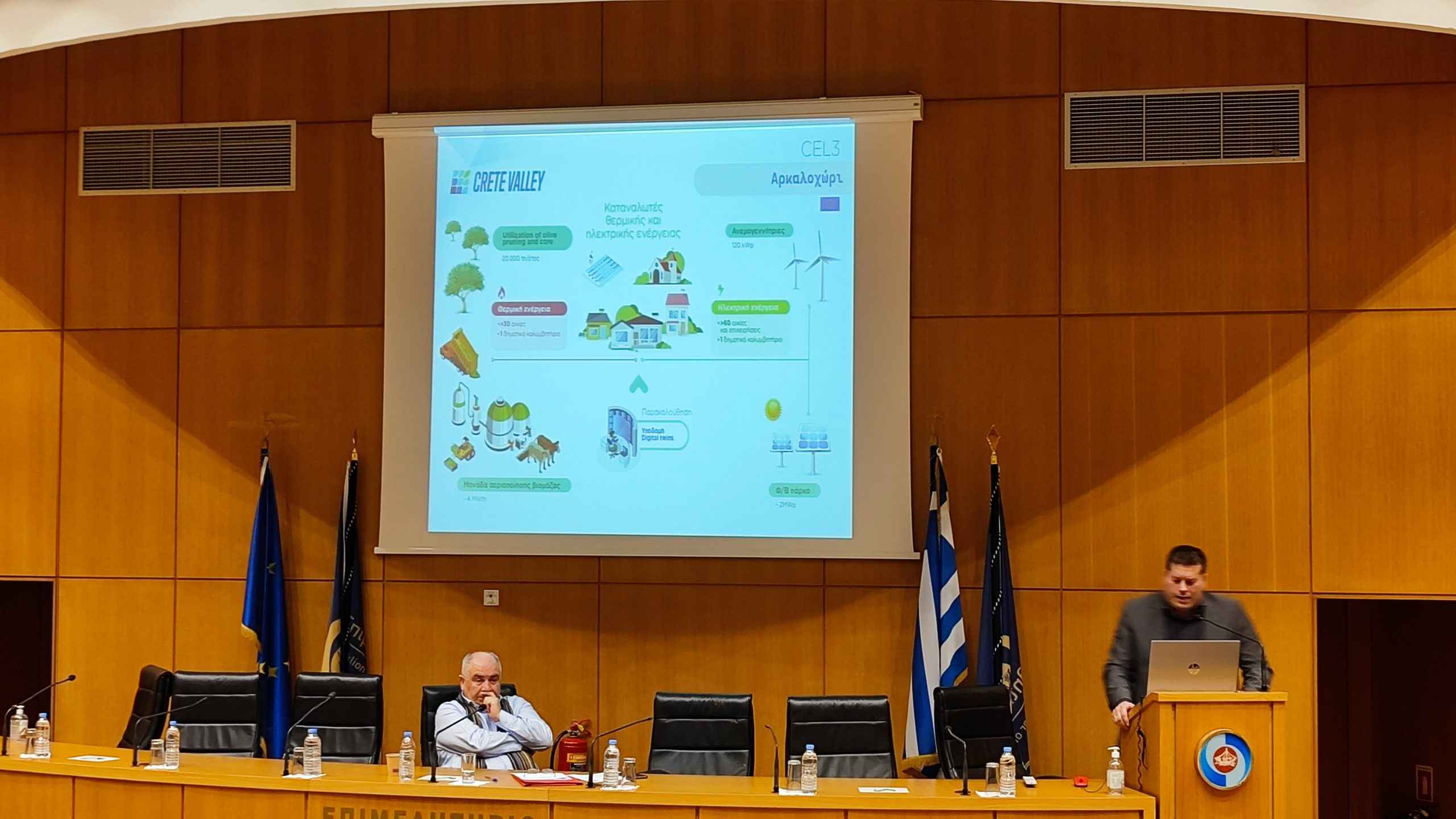
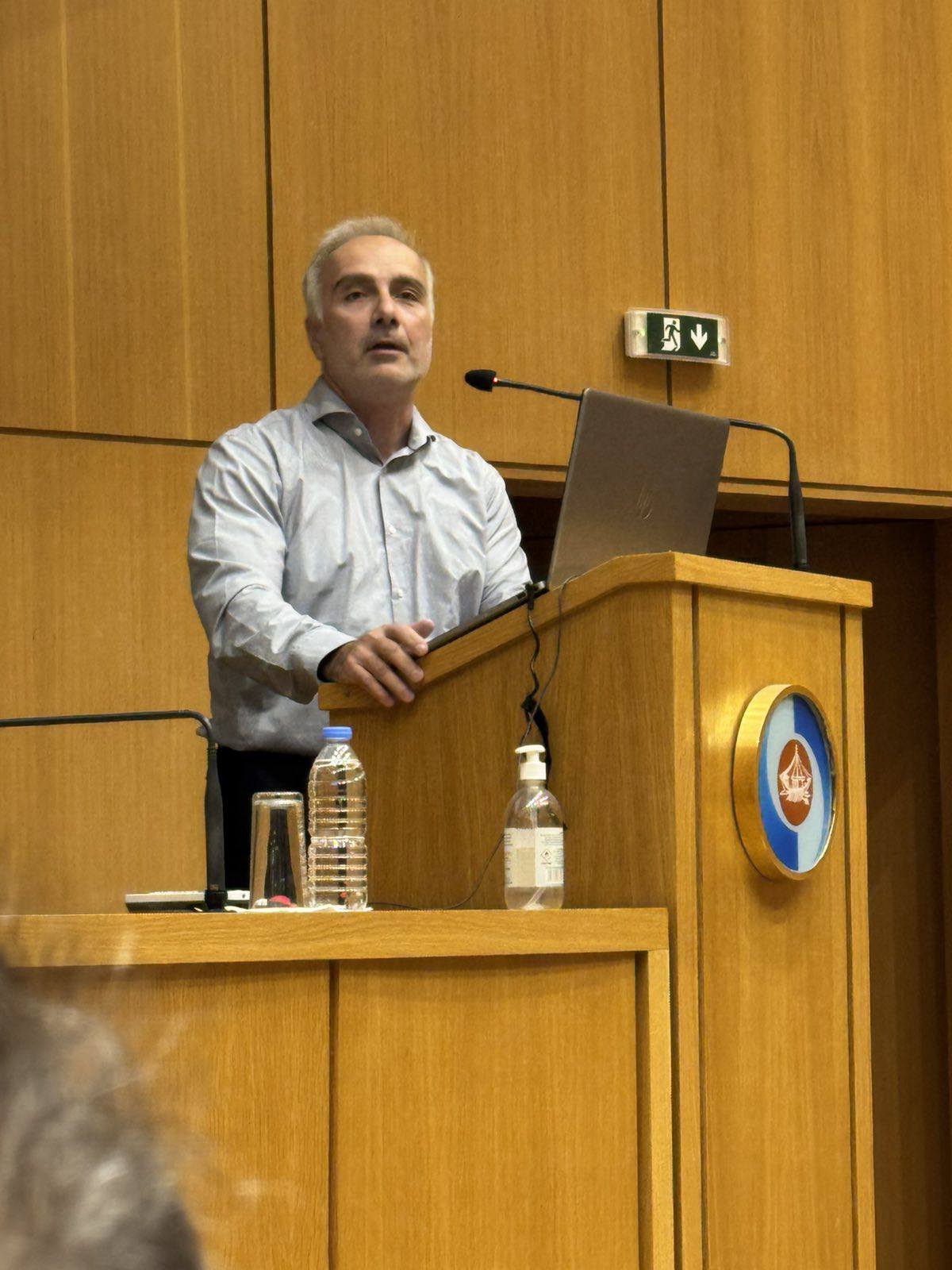
Then, Professor Emeritus of the NTUA School of Electrical and Computer Engineering and former President and CEO of HEDNO, Mr. Chatziargyriou, spoke about the “Optimal utilization of the electrical energy space for RES interconnection,” while Assistant Professor of the same School, Vaggelis Marinakis, presented the project “Crete Energy Valley,” in which 41 institutions participate, including the Region of Crete, the Minoan Energy Community, and the National Technical University of Athens, aiming to create the first Renewable Energy Valley in Europe.
The speakers and the citizens’ interventions that followed were moderated by journalist Mr. Argyarakis, whom we warmly thank.
The prevailing sentiment at the end of the conference was summed up in a phrase heard repeatedly among participants: “All of Crete is here today.” And as Dimitris Katsaprakakis noted in his remarks, borrowing the words of C.P. Cavafy: “It is the moment for the great Yes or the great No.”
This is the moment when all of Crete—citizens, local government, the scientific community, and productive sectors—stands united to claim the self-evident: their right to this public good called Energy.
For this reason, we call on the members and friends of our Community to support the fair demands clearly expressed at the Conference by signing the relevant resolution that includes them and is available at the following link:
https://openpetition.eu/!apekritis


 English (UK)
  Ελληνικά