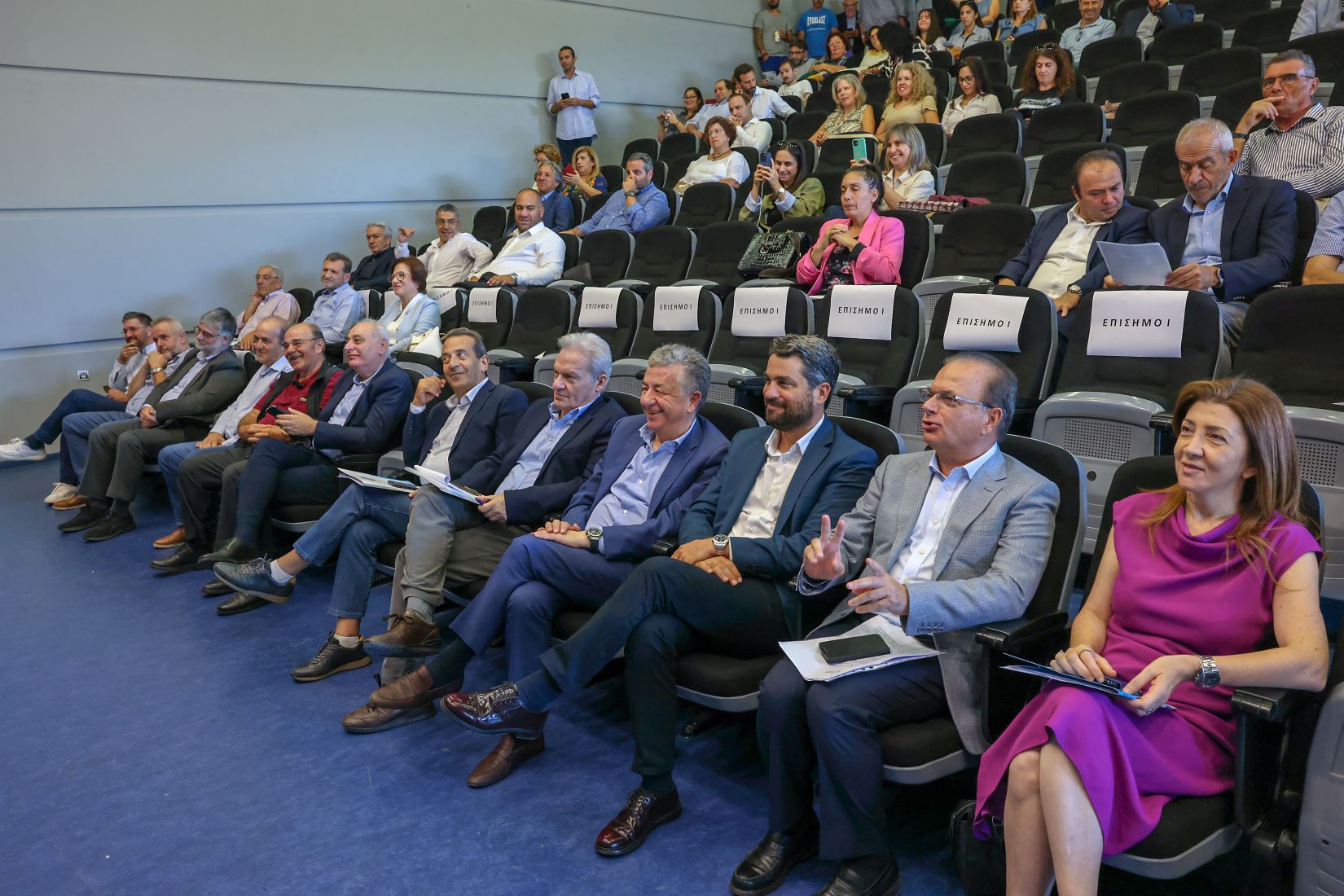
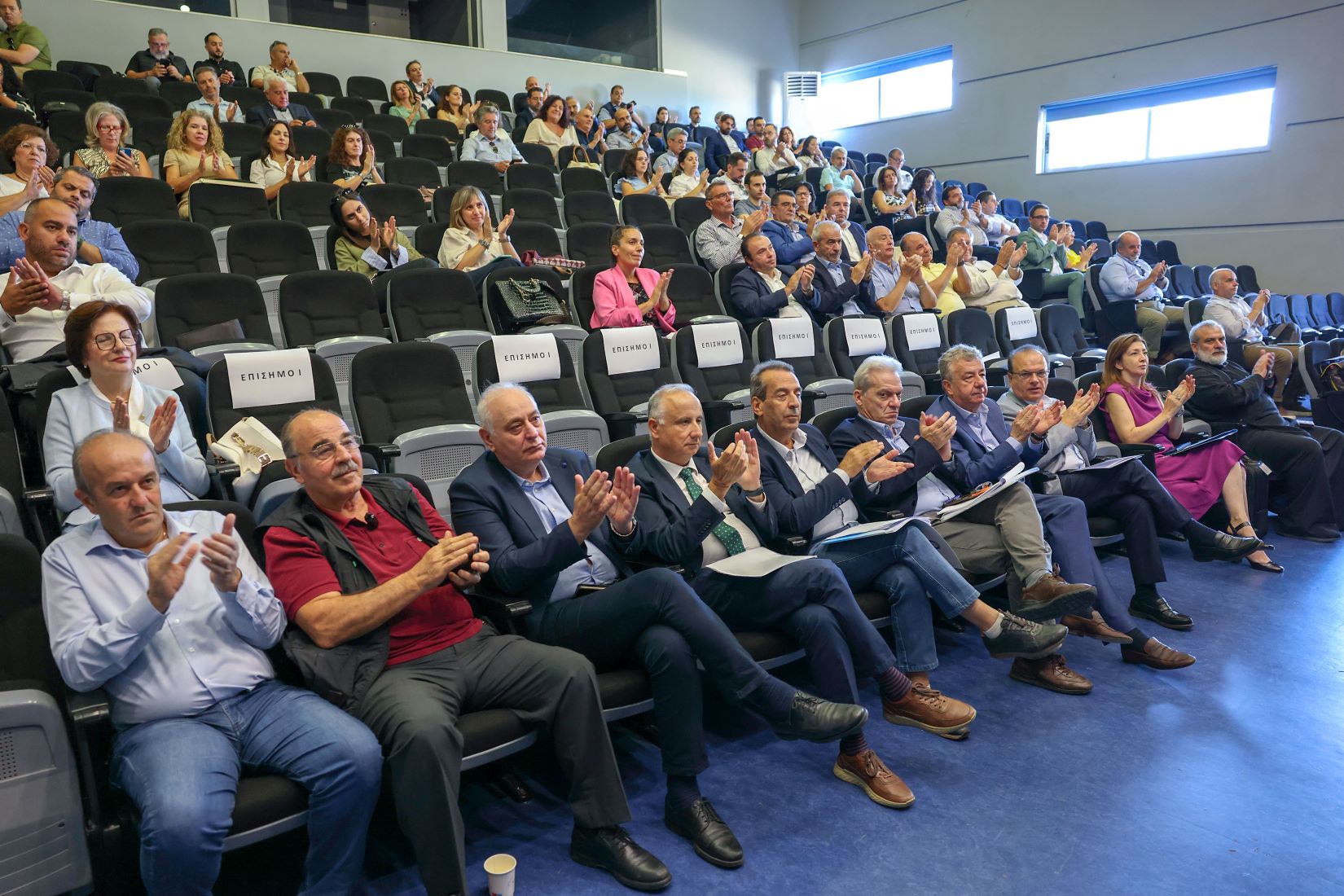
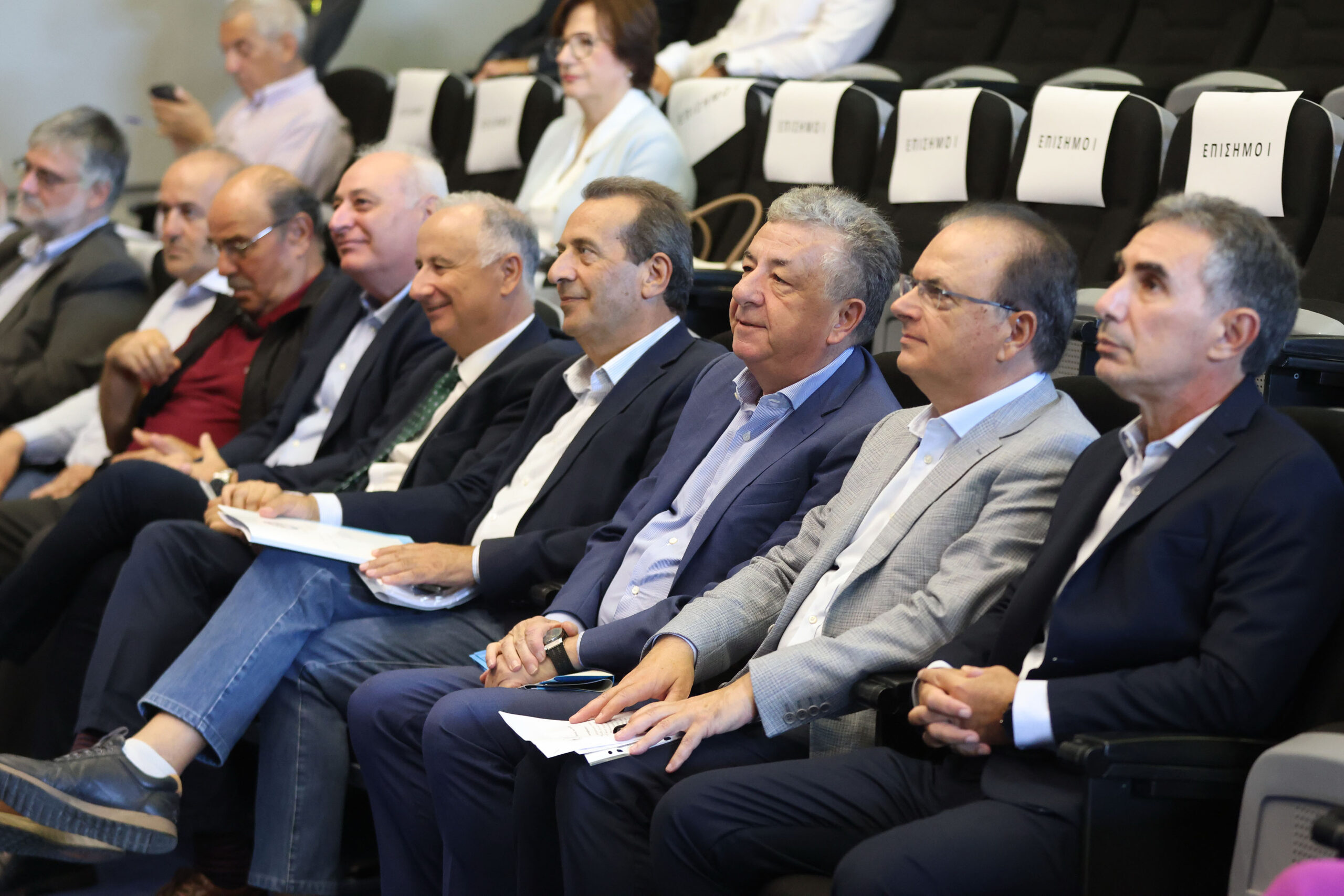
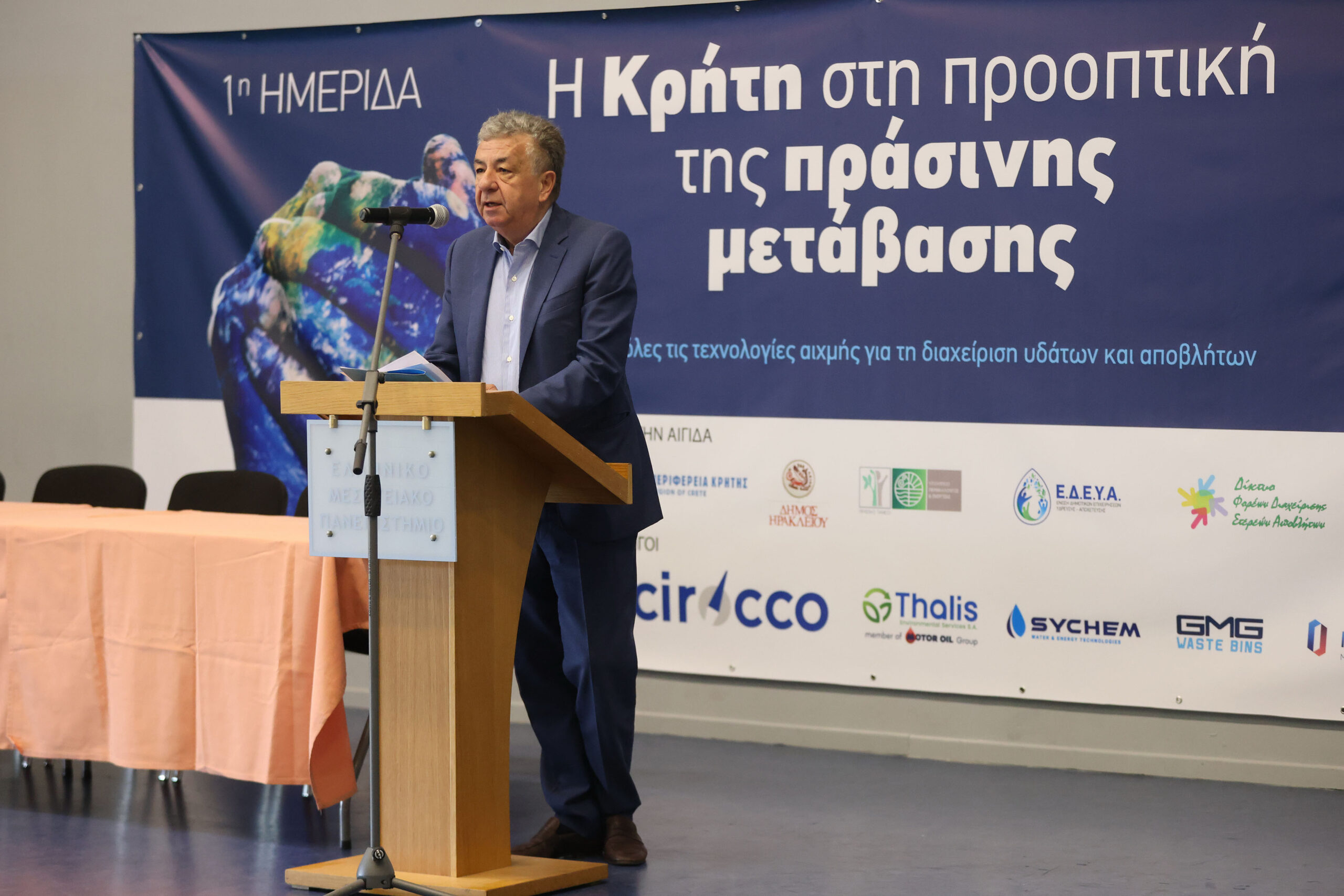
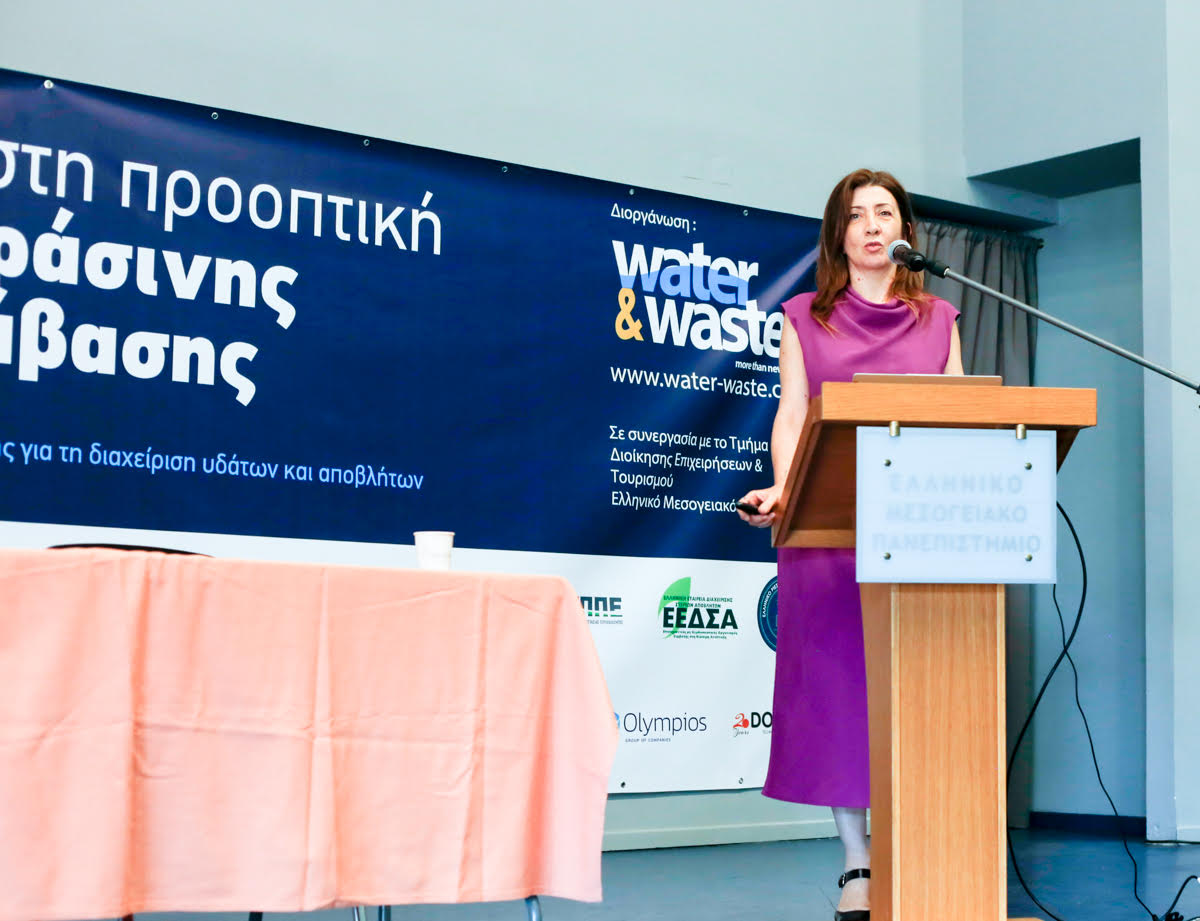
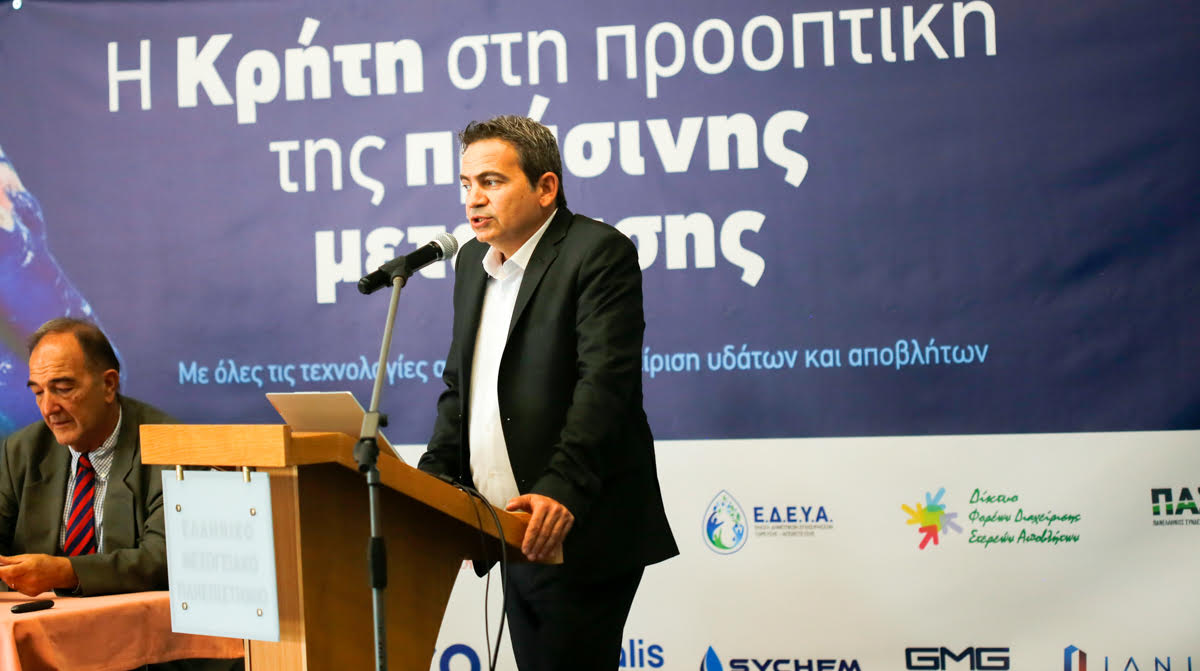
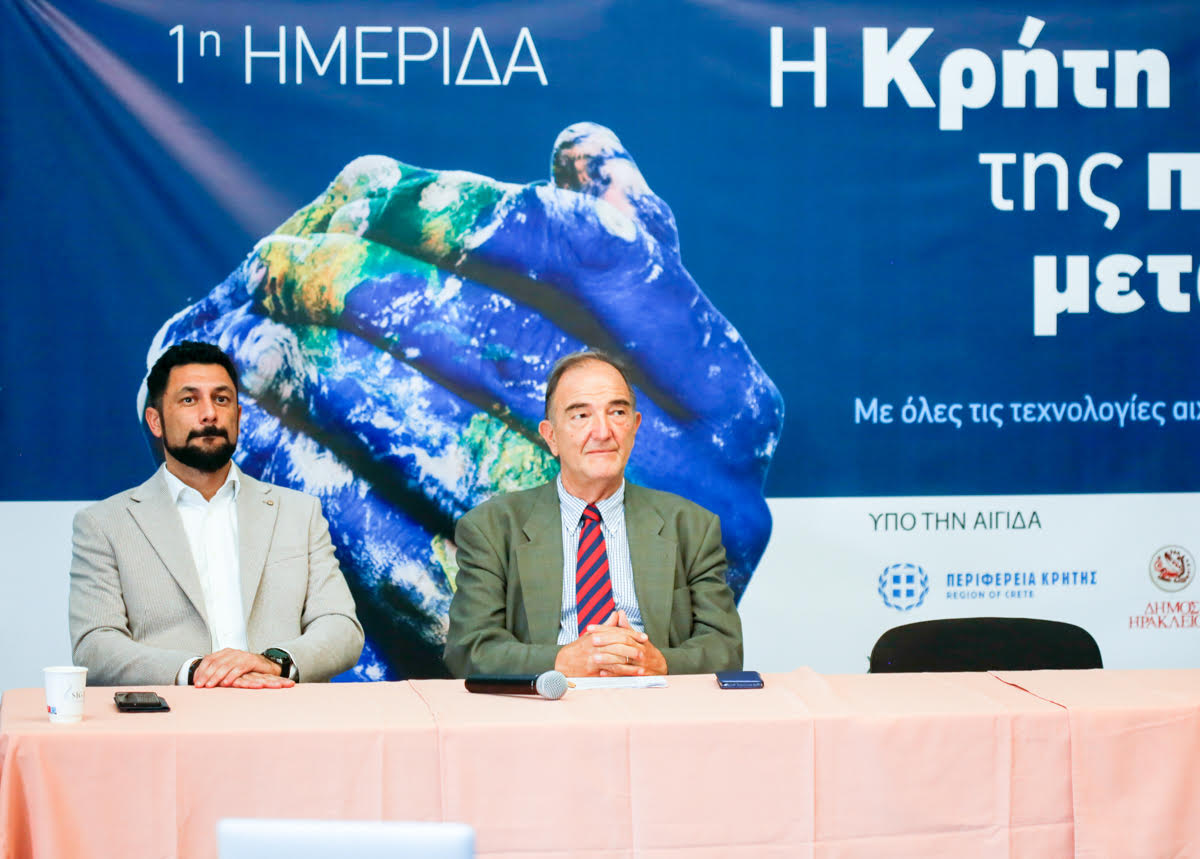
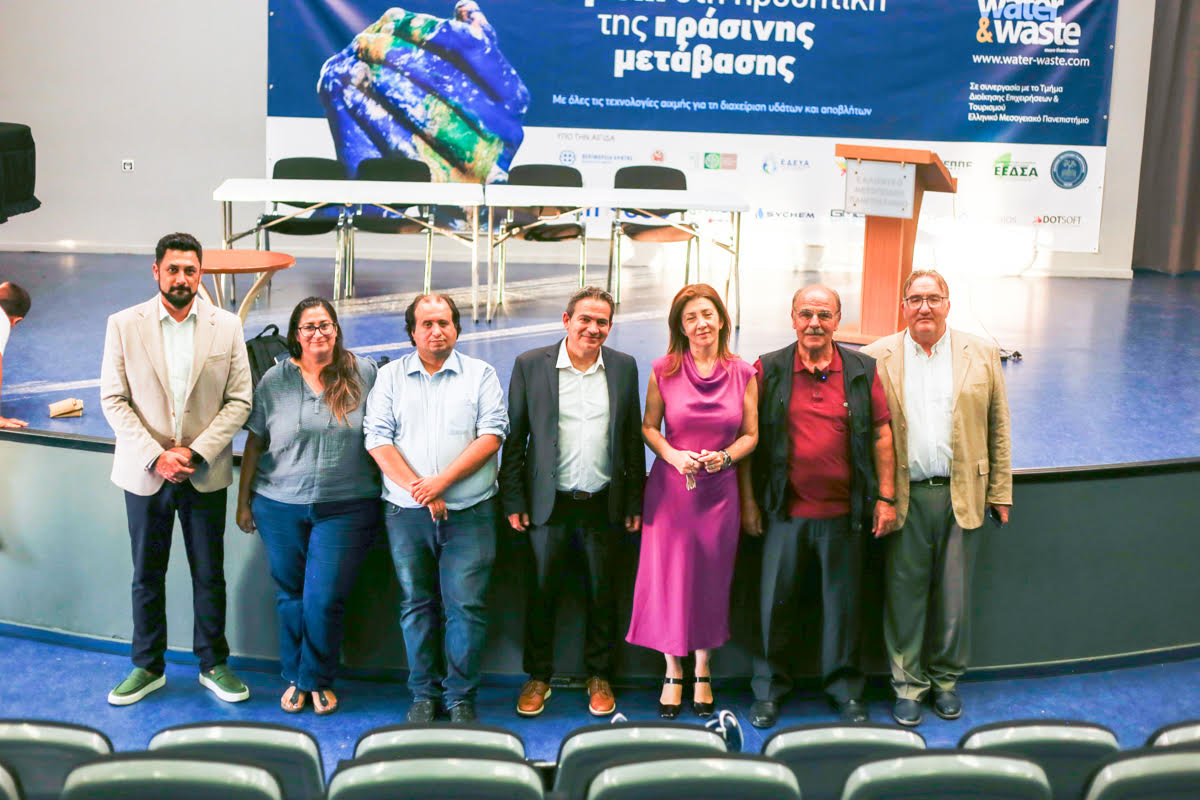
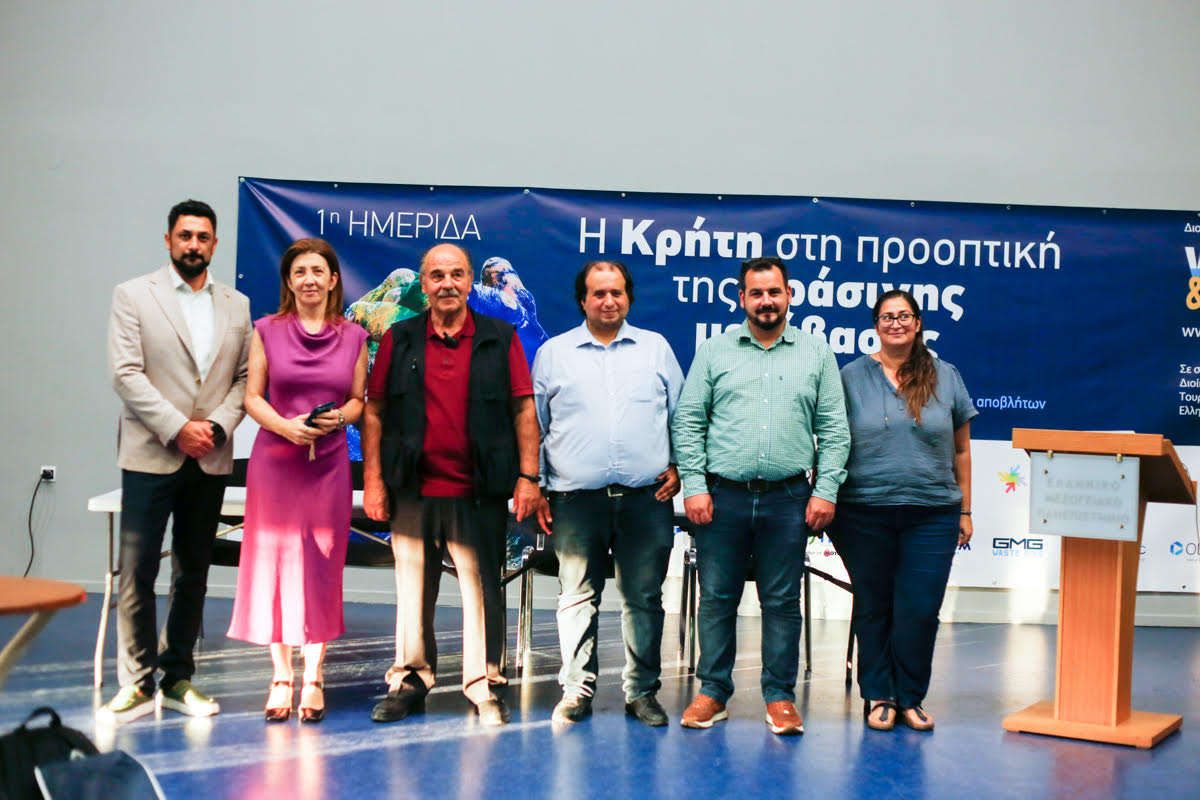
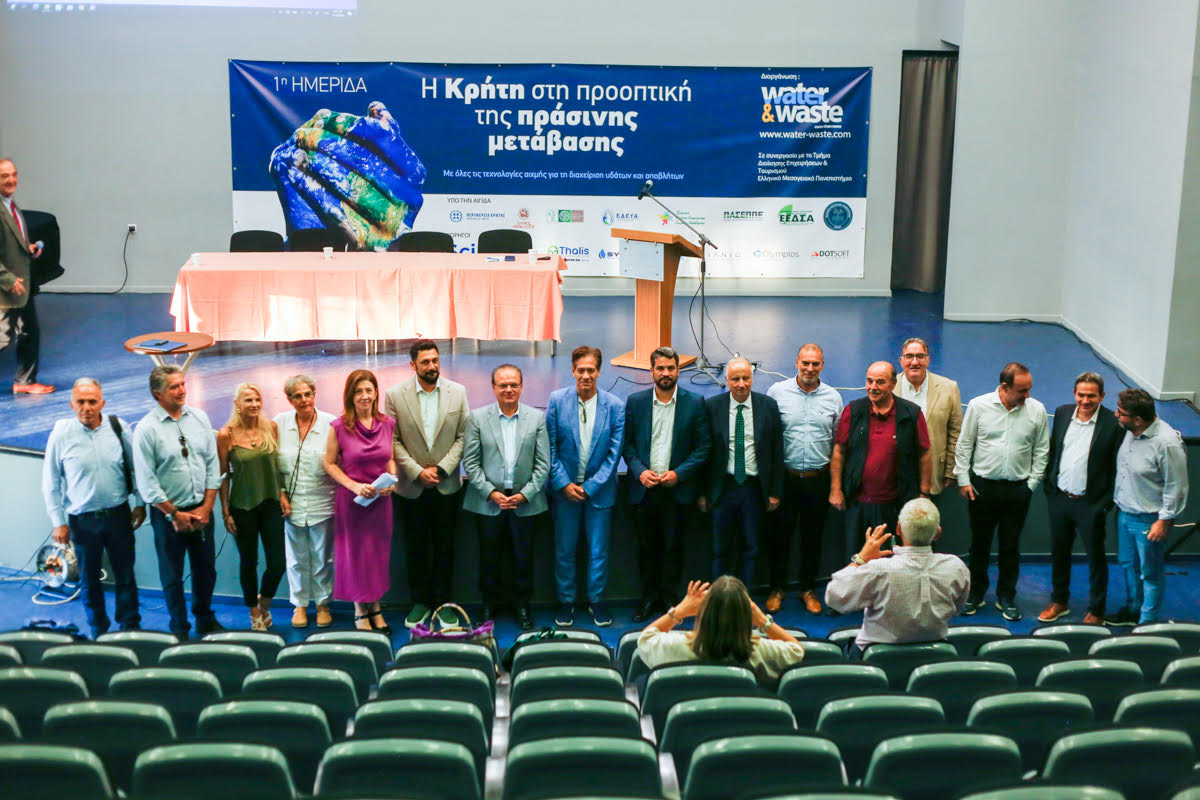
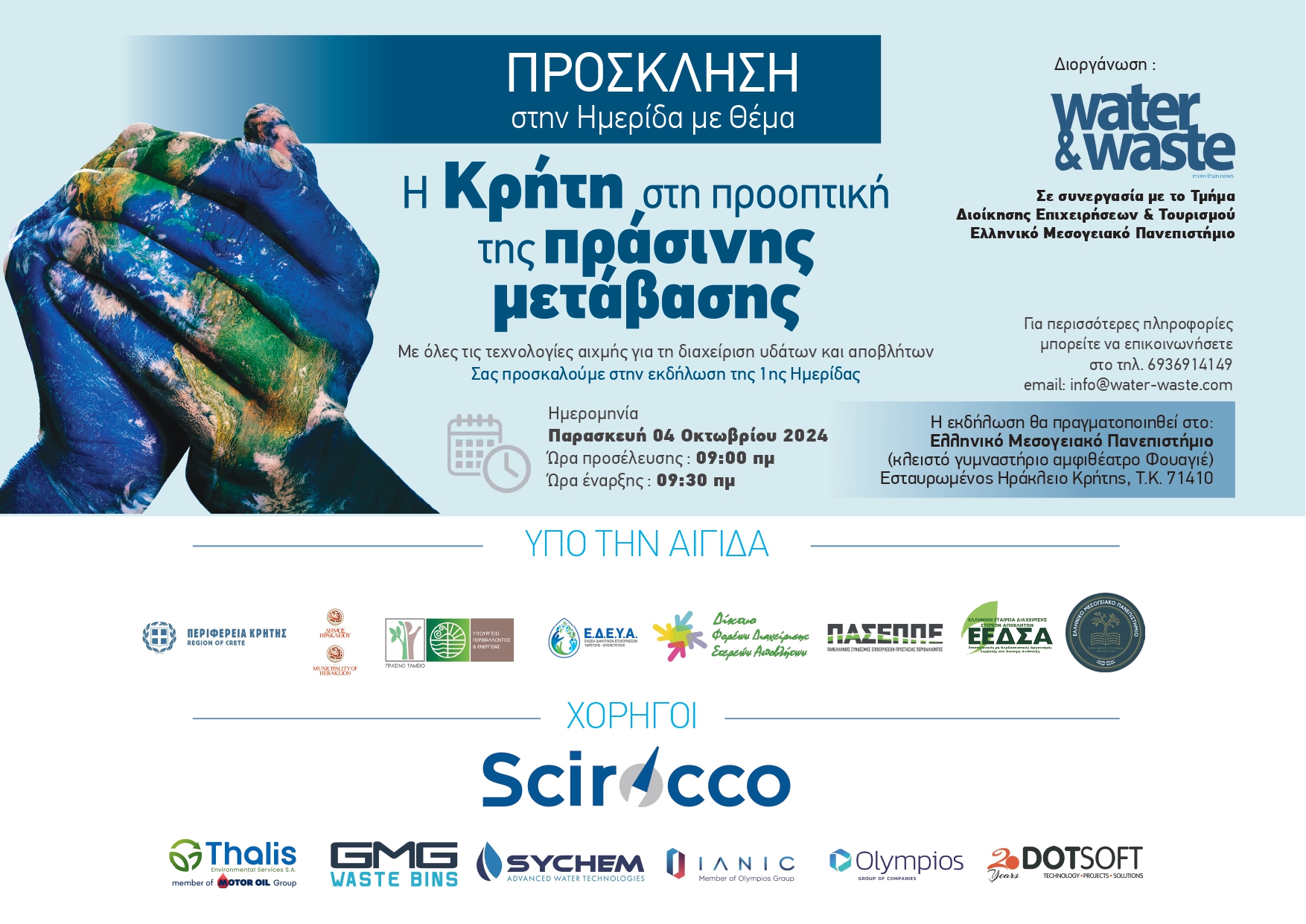
A very interesting conference titled “Crete in the Perspective of the Green Transition” took place on Friday, October 4, at the Hellenic Mediterranean University. The event was organized by the Department of Business Administration and Tourism of the University and the publishing company Water & Waste, under the auspices of the Region of Crete, the Municipality of Heraklion, the Green Fund, the Hellenic Association of Municipal Enterprises for Water Supply and Sewerage, the Network of Solid Waste Management Agencies, the Hellenic Association of Environmental Protection Companies, and the Hellenic Solid Waste Management Association.
The conference featured dedicated discussion panels with keynote speakers including the Secretary General for Natural Environment and Water, Petros Varelidis, and the President of the Green Fund, Ioannis Androulakis. They presented the current legislative framework and the national strategy for the environment and sustainability. In their speeches, both representatives of the central government acknowledged the island’s particularities, as well as the important innovation ecosystem emerging from the collaboration between local authorities, institutions, and the scientific community to address the various challenges.
The event was welcomed by the Regional Governor of Crete, Stavros Arnaoutakis, whom we warmly thank, as he once again praised the work of Minoan Energy. The panel discussions were moderated by representatives of the municipalities of Heraklion (Mr. Kalokairinos), Hersonissos (Mr. Doxastakis), Viannos (Mr. Baritakis), and Gazi (Mr. Bokeas), as well as the Mayors of Chania (Mr. Simandirakis) and Rethymno (Mr. Marinakis), in their institutional roles and in their capacities related to waste and water management.
Minoan Energy, consistently seeking to be present in all discussions related to the Green Transition, the Circular Economy, and the broader development prospects of our region, participated with many members of its scientific team. Through their presentations and interventions, they highlighted the major issue of energy poverty affecting many Greek households, the role of Energy Communities in a just Energy Transition, the importance of Energy and Water as human rights and social goods, as well as the distortions in the legislative framework concerning their management.
The discussion on the Green Transition cannot be exhausted within the scope of a single conference. However, events like this one—bringing together academia, local government, public institutions, state representatives, and civil society—shed light on the different dimensions of the issue, highlight opportunities for cooperation, and place the conversation on a realistic foundation, for the benefit of citizens, who are ultimately the primary concern.
 English (UK)
  Ελληνικά