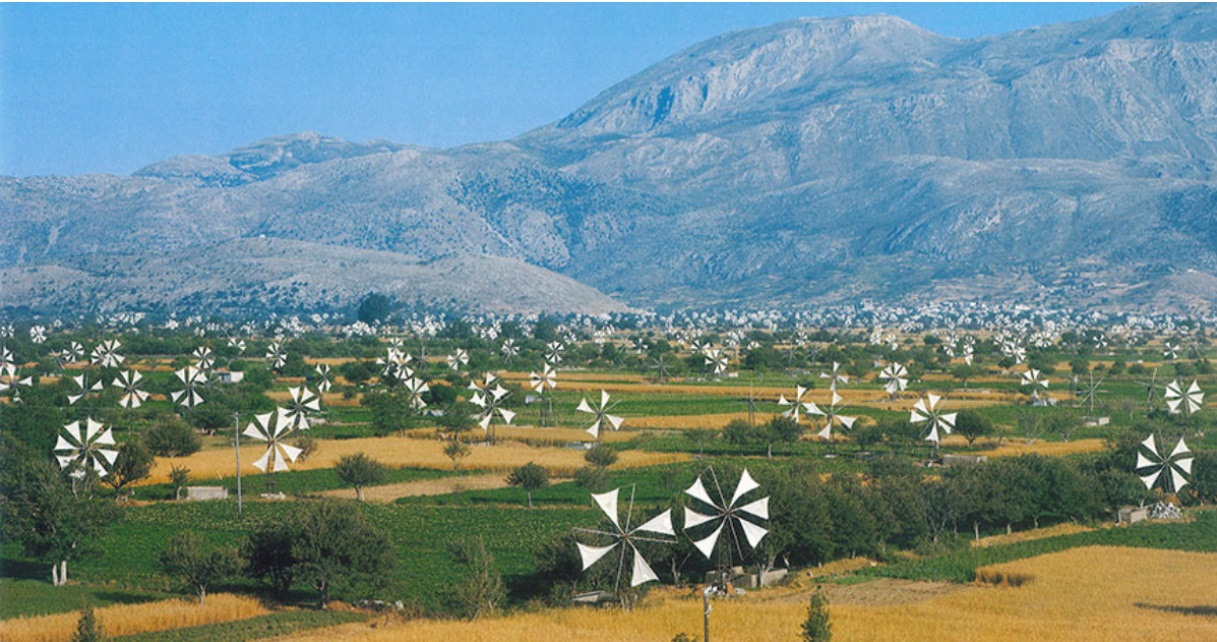
The Lasithi Plateau is one of Crete’s most distinctive landmarks, well‑known throughout Greece, with significant historical, agricultural, economic, climatic, and folkloric importance. It is located in the mainland area of the Lasithi Regional Unit, in the middle of the Dikti mountain range, at an altitude exceeding 800 meters. Due to its mountainous location, the region is characterized by a cold climate, with indoor heating required for nine months of the year. Each year, for a period that can last several weeks, the Plateau is completely covered in snow. Today it is home to approximately 2,400 permanent residents, who are engaged in agriculture, livestock farming, and tourism. The main energy need of the area is indoor heating.
Given the existing agricultural and livestock activities, the installation of a biogas production unit has been planned. It will include a reception area for liquid and solid organic waste, feeding stations, primary and secondary digesters, and a biogas storage facility. The organic waste that can be utilized includes cooking fats, bakery waste, animal manure, whey, alfalfa, and other animal feed. The biogas produced from these materials will supply a combined heat and power (CHP) system. The price of the heat provided to project participants will be set in a way that ensures the annual operation and maintenance of the unit. In any case, the heating cost for participants will be at least 50% lower compared to current oil‑based heating systems.
Additionally, fifty small electric windmills, each with a nominal capacity of 3 kW and designed in the style of the traditional windmill that is the trademark of Lasithi, will be installed for electricity production. It is worth noting that this modern version of the traditional windmill, adapted for electricity generation, is an innovation of the Hellenic Mediterranean University, with their design, construction, and maintenance supported by local scientists and engineers—adding further value to the project. The electricity produced by these electric windmills will be net‑metered against the consumption of participating households, reducing their electricity bills by up to 70%, just as in the case of Arvi.
 English (UK)
  Ελληνικά