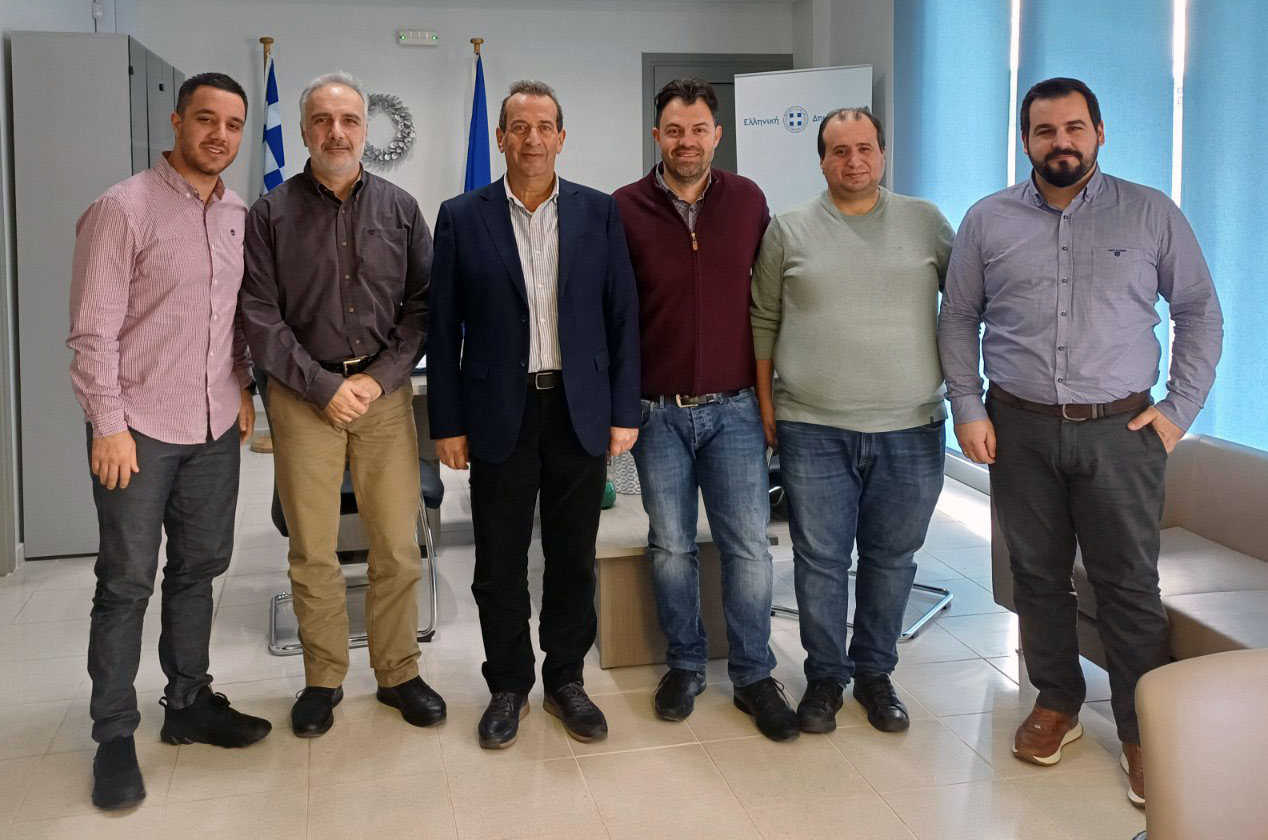
Σε πολύ καλό κλίμα πραγματοποιήθηκε το πρωί της Παρασκευής 26ης Ιανουαρίου, συνάντηση στελεχών της Μινώα Ενεργειακής με το Δήμαρχο Χερσονήσου κ Ζαχαρία Δοξαστάκη.

Η συζήτηση εστίασε στη στήριξη της προσπάθειάς μας, για ενεργειακή δικαιοσύνη και δημοκρατία στην Κρήτη, με τη συμμετοχή του Δήμου Χερσονήσου στη Μινώα Ενεργειακή, αλλά και στις δυνατότητες υποστήριξης του Δήμου από την Κοινότητά μας.

Πιο συγκεκριμένα, συμφωνήθηκε η Κοινότητά μας να εκπονήσει μία μελέτη ενεργειακής αναβάθμισης μιας δημοτικής υποδομής που θα μας υποδείξει ο Δήμος, η οποία θα είναι πλήρης και έτοιμη προς υλοποίηση, δηλαδή σε επίπεδο οριστικής μελέτης εφαρμογής και τευχών δημοπράτησης, χωρίς καμία οικονομική επιβάρυνση του Δήμου. Το κόστος της μελέτης θα καλυφθεί από το Ευρωπαϊκό Έργο Life Local Ownership Of Power (Life LOOP) στο οποίο συμμετέχει η Μινώα Ενεργειακή.

Επίσης, τα στελέχη της Μινώα δήλωσαν τη διαθεσιμότητά τους, σε περίπτωση που χρειαστεί, να ενημερώσουν σχετικά το Δημοτικό Συμβούλιο και τις υπηρεσίες του Δήμου, τόσο για το εν λόγω έργο, όσο και για άλλα έργα στο μέλλον.

Από τη μεριά του ο κος Δοξαστάκης δήλωσε την πρόθεσή του να ενταχθεί ο Δήμος Χερσονήσου στη Μινώα Ενεργειακή και να εμβαθύνουμε τη συνεργασία μας στο πλαίσιο των επόμενων έργων μας.

Ευχαριστούμε θερμά το Δήμαρχο κ. Δοξαστάκη για τη θερμή και ευγενική διάθεση με την οποία μας υποδέχτηκε, όπως και για τη δεκτικότητα και το ανεπιτήδευτο ενδιαφέρον του στις προτάσεις μας, τα οποία μας αφήνουν τις καλύτερες προσδοκίες για μία άριστη μεταξύ μας αλληλοϋποστήριξη, με κοινό στόχο την ελαχιστοποίηση του ενεργειακού κόστους και την επίτευξη της ενεργειακής δημοκρατίας στον τόπο μας
On Nea Television Crete, the President of Minoan Energy, Charalambos Giannopoulos, and its technical advisor, Giorgos Viskadouras, spoke about the potential for Crete’s energy wealth to be harnessed by its own citizens, during the programme Epikentro, hosted by Mr. Kourkoulos.

They emphasized that Energy Communities are the ideal choice for citizens who wish to have their own energy and avoid dependence on any external provider.

Through their equal and cooperative structure, Energy Communities enable all citizens to produce the energy needed for their homes and businesses, at low cost and without requiring equipment or technical expertise on their part.

You can watch the full interview on the Minoan Energy YouTube channel: https://www.youtube.com/watch?v=skDSNzpoimw

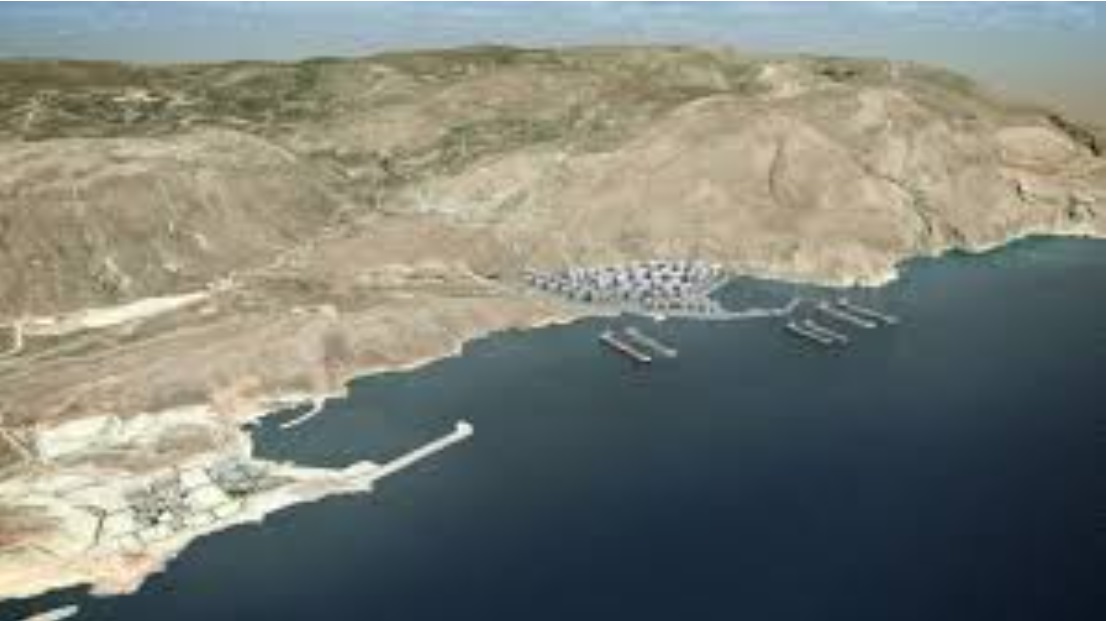
In Atherinolakkos, the green‑hydrogen valley being developed by EUNICE will have the capacity to produce 300–500 tons of hydrogen annually, using electricity from a nearby dedicated photovoltaic plant. The hydrogen produced will increase the available energy and meet the island’s heightened energy demand during the summer period. The surplus energy will enable the development of storage systems, contributing to the reduction of dependence on oil.

A critical factor for the viability of a green‑hydrogen production facility is increasing the system’s capacity factor. This can be achieved by extending full‑load operating hours, thereby reducing investment costs. At the same time, increasing the use of green hydrogen on the island of Crete will enhance energy security, smooth out mismatches between energy production and consumption caused by high seasonal demand, and help reduce carbon‑dioxide emissions. To achieve all of the above, a stable demand from end users must be ensured.

In this context, the project aims to increase the demand for the green hydrogen produced in Atherinolakkos. One of the actions supporting this goal is the use of hydrogen fuel‑cell buses, which also demonstrates the importance of hydrogen in the transport sector. Hydrogen will also be used for combined heat and power generation for the nearby villages. Finally, part of the generated electricity will be used to supply five electric‑vehicle chargers, which will additionally be able to feed energy back into the distribution system when the vehicles are not in use.

The above actions are expected to demonstrate in practice the advantages of green hydrogen as a fuel in all energy‑demanding activities, thus contributing to its wider adoption by the island’s residents.

The main objective of the project is to create a real and fully operational example of a Renewable Energy Valley on the island of Crete, combining cutting‑edge ICT technologies (Internet of Things, Artificial Intelligence, Blockchain, Augmented Reality) with innovative social processes that enable joint participation in the design, development, and adoption of the project’s infrastructures. Emphasis will be placed on the transition from a centralized, carbon‑based energy model to a decentralized renewable‑energy and low‑emission framework that will meet the local community’s annual energy needs by harnessing multiple renewable sources (solar and wind energy, geothermal energy, biomass, biogas, hydrogen) for electricity supply, heating, and mobility.

The above strategic objective is further specified into seven measurable, realistic, and achievable sub‑objectives:

  1. To establish a living laboratory of a Renewable Energy Valley in Crete, using methodologies from the social and human sciences and innovative, multi‑level governance models, in order to make the project feasible in terms of its management, economic sustainability, and the policies to be implemented.
  2. To develop planning tools for addressing technical issues, protecting the environment, and documenting the social conditions that influence the creation of the Renewable Energy Valley.
  3. To develop tools for the secure, reliable, and participatory sharing of data, in accordance with the architectures of digital platforms for energy‑data exchange (Energy Data Space).
  4. To leverage cutting‑edge technologies (e.g., artificial intelligence), virtual representations (digital twins), flexible modeling services, and applications that utilize data from multiple sources, in order to ensure the optimal operation, proper management, and resilience of energy infrastructures, as well as the active participation of consumers in energy use (e.g., selecting the appropriate energy source, adjusting their consumption plan).
  5. To demonstrate and validate the energy solutions of the Valley by bringing together different decentralized energy sources (solar and wind energy, geothermal energy, biomass, biogas, hydrogen) in areas with varying climates, operating under the supervision and participation of diverse stakeholders (grid operators, energy communities, local and regional authorities, local businesses, local residents).
  6. To define, validate, and replicate robust business models across the entire value chain, with an emphasis on inclusive and economically feasible access to energy for all citizens.
  7. To facilitate the development of Renewable Energy Valleys across Europe by leveraging the project’s results and by building the necessary skills among stakeholders. A prerequisite for this is the effective dissemination of the acquired know‑how and the creation of synergies with other related European initiatives and projects.

This section presents both the expected benefits of the project and its long‑term impact. A set of measurable performance indicators defines the successful execution of the project across various domains, while also serving as a guide for the implementation team.

The expected benefits are:

  1. The contribution to the implementation of the European Commission’s REPowerEU plan, which forms part of the European Green Deal for achieving EU climate neutrality by 2050.
  2. The strengthening of local and regional systems for electricity supply, heating, and fuel use, as well as the contribution to the adoption of such solutions at the European level.
  3. The creation of new sustainable jobs linked to local or regional value chains of renewable‑energy systems, and the reinforcement of economic development within local communities across Europe’s regions.
  4. The enhancement of energy security and autonomy at local and regional level in EU Member States and Associated Countries, taking into account current and future climate conditions.
  5. The strengthening of the preparedness, reliability, performance, and affordability of local or regional renewable‑energy systems across Europe.

Regarding the long‑term impact of the project:

  1. The strengthening of Europe’s position as a global leader in affordable, secure, and sustainable renewable‑energy technologies.
  2. The development of more effective approaches for managing smart and cyber‑secure energy networks, and for optimizing the interaction between producers, consumers, grids, infrastructures, and stakeholders.

The project consortium consists of more than forty members from ten countries, representing a wide range of scientific and professional fields. Their common characteristics include strong scientific competence, solid technical expertise, extensive networking capacity, and a clear social orientation in the projects they undertake. The list of members follows.

S/A

Name of Participating Organization

Short Name

Country

Role

1

Institute of Communication and Computer Systems

ICCS

Greece

Technology Providers (interoperability, data sharing, energy management, Digital Twin, grid operation and planning)

2

Centre for Research and Technology-Hellas

CERTH

Greece

3

Fundación CARTIF (CARTIF Technology Center)

CARTIF

Spain

4

INESC TEC – Institute for Systems and Computer Engineering, Technology and Science

INESC TEC

Portugal

5

University of Jaén

UJA

Spain

6

European Dynamics Luxembourg SA

ED

Luxembourg

7

COMSENSUS D.O.O.

COMS

Slovenia

8

RWTH Aachen University

RWTH

Germany

9

Électricité de France

EDF

France

10

Electric Power Research Institute Europe DAC

EPRI

Ireland

11

ONE TEAM SRL

ONETEAM

Italy

12

HOLISTIC IKE

HOL

Greece

Technology providers for RES, hydrogen, storage, and digital solutions (V2G, smart homes)

13

PARITY PLATFORM IKE

PARITY

Greece

14

ENDEF Engineering SL

ENDEF

Spain

15

Hellenic Mediterranean University

HMU

Greece

16

e-Synergy Private Capital Company

SYNERGY

Greece

17

Samsoe Energy Academy

SAMSOE

Denmark

18

PLANENERGI FOND

PLAN

Denmark

19

SyChem SA

SYCHEM

Greece

20

Solmar

SOLMAR

Greece

21

Region of Crete (KRITI)

RoC

Greece

Regional Authority

22

Minoan Energy Community

MINOAN

Greece

Energy Community

23

EUNICE Laboratories Monoprosopi Anonymi Etaireia

EUNICE

Greece

Energy Team (H2)

24

Independent Power System Operator

IPTO

Greece

Energy Network Operators

25

Hellenic Electricity Distribution Network Operator Greek

HEDNO

Greece

26

Hellenic Gas Transmission System Operator S.A.

DESFA

Greece

27

Hellenic Energy Exchange S.A.

HEnEx

Greece

Energy Market

28

Regulatory Authority for Energy

RAE

Greece

Regulatory Authority

29

MOL TEIC – Dingle Hub

DINGLE HUB

Ireland

Follower Communities (FOL-COMs)

30

ASM Terni Spa

ASM

Italy

31

EMOTION SRL

EMOTION

Italy

32

Capwatt Services S.A.

CAPWATT

Portugal

33

XKW Consulting and Engineering

XKW

Portugal

34

Graciólica Lda

GRACIÓLICA

Portugal

35

European Federation of Agencies & Regions for Energy & Environment

FEDARENE

Belgium

European Networks (Energy Communities Repository, Covenant of Mayors, etc.)

36

ICLEI Europasekretariat GmbH

ICLEI

Germany

37

Conference of Peripheral Maritime Regions

CPMR

France

38

Fondazione ICONS

ICONS

Italy

Contact

39

B.A.U.M. Consult GMBH

BAUM

Germany

Networking (BRIDGE)

40

DELOITTE LIMITED

DELOITTE

Cyprus

Business Modelling

41

Zentrum für Soziale Innovation GMBH

ZSI

Austria

Social Context


Την Τρίτη 12 Δεκεμβρίου 2023 πραγματοποιήθηκε στην Αθήνα η εναρκτήρια συνάντηση των εταίρων του έργου, με συντονιστή το Ινστιτούτο Επικοινωνιών & Συστημάτων Υπολογιστών του Εθνικού Μετσόβιου Πολυτεχνείου (ICCS).

Τις ημέρες που ακολούθησαν της εναρκτήριας συνάντησης, η επιστημονική ομάδα της Μινώα Ενεργειακής πραγματοποίησε σειρά επαφών με τους τοπικούς φορείς των τεσσάρων ωφελούμενων περιοχών της Κρήτης, προκειμένου αφενός να ενημερώσει για τα οφέλη και τις καινοτομίες του έργου, αφετέρου για να εξασφαλίσει τη συνεργασία και υποστήριξη σε θέματα αδειοδότησης και χωροθέτησης των εγκαταστάσεων.

Παράλληλα, η Κοινότητα, συνέστησε την ομάδα έργου, μοίρασε ρόλους και αρμοδιότητες και προχώρησε στην ανάλυση απαιτήσεων και τις προκαταρκτικές μελέτες υλοποίησης των επιμέρους έργων, για τις περιοχές αρμοδιότητάς της.

Τον Ιανουάριο του 2024, πραγματοποιήθηκαν διευρυμένες συναντήσεις των επιστημονικών και μελετητικών ομάδων όλων των εταίρων που εμπλέκονται στην υλοποίηση των έργων, με στόχο την καλύτερη κατανόηση των τεχνητών απαιτήσεων και τη διαμόρφωση συναντίληψης των λεπτομερειών υλοποίησης.

Το τρέχων διάστημα, κάθε μελετητική ομάδα προχωρά στην ωρίμανση των σχεδίων υλοποίησης, που μεταξύ των άλλων περιλαμβάνουν τη διαστασιολόγηση, την κοστολόγηση αλλά και τους χρόνους απόσβεσης, σε διαφορετικές παραμετροποιήσεις των ενεργειακών εγκαταστάσεων.

The purpose of the European project WENDY is to reverse the negative predisposition of local communities toward wind energy by promoting social ownership and encouraging the participation of citizens and local stakeholders in the energy‑production process.

Six EU Member States participate in the project — Belgium, Denmark, Greece, Italy, Norway, Spain, and Greece — represented by nine organisations: APPA Renewables, Copenhagen Business School, Enel Green Power, Minoan Energy Community, Circe Foundation, Marin Energi Testsenter, Q‑Plan International Advisors, Stiftelsen Norsk Institutt for Naturforskning (NINA), and White Research.

WENDY applies a multi‑criteria analysis to identify the technical, environmental, and social factors that enhance the social acceptance of wind energy.

Local actions are carried out to inform citizens and help them understand the issue, while the Knowledge‑Exchange Platform to be developed will support stakeholders in adopting innovative technologies.

WENDY will validate its proposed solutions through four case studies and a total of ten wind‑energy projects.

One of these projects is the wind farm planned in the Asterousia Mountains of Crete. It will consist of four wind turbines with a total capacity of 12 MW. The location has been carefully selected to avoid — or at least minimise — any potential impact on the natural environment or existing human activities. However, the site could still lead to potential conflicts, making social acceptance a significant challenge.

For this reason, the project aims to ensure the positive and effective involvement of the local community, which will support the development and operation of the wind‑energy project.

The Minoan Energy Community will explore the application of WENDY’s results on one or two additional islands beyond Crete. One of these is the case of Sifnos, one of the six pilot islands of the “Clean Energy for EU Islands” initiative, where concerns about social acceptance still persist, particularly regarding the island’s natural environment and visual landscape.


Posts pagination

en_GBEnglish (UK)