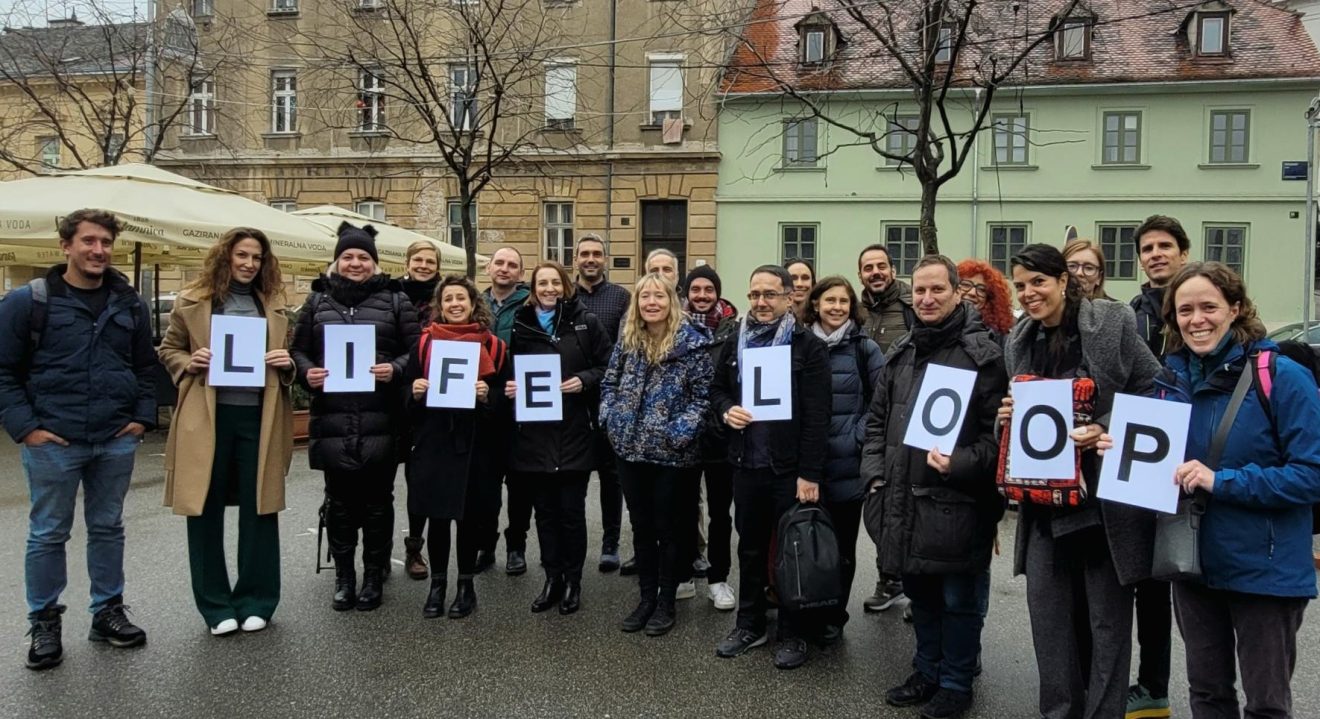
This project is an initiative of five partners — Energy Cities (France), Electra (Greece), ZEZ (Croatia), Cooperativa de Energie (Romania), and REScoop.eu (Belgium) — aiming to empower regions and local authorities to achieve their sustainability strategies and energy plans by building partnerships and developing community energy projects. Three European regions will serve as the project’s first pilots: Crete in Greece, Zagreb in Croatia, and Bistrița in Romania, while the project’s outcomes are expected to be applied in additional areas in Bulgaria, Romania, Cyprus, and Italy.

More specifically, the project aims:

  1. To support local and regional authorities, citizens, and other stakeholders in collaborating to develop new partnerships and achieve community clean‑energy goals.
  2. To unlock and leverage existing and new funding sources for the creation of community energy initiatives.
  3. To simplify the regulatory framework and reduce the barriers that hinder the development of community energy in municipalities, by adapting local policy where possible.
  4. To incentivise broader citizen participation in energy communities by developing a training programme and an award scheme for “community‑energy‑friendly” initiatives. Ensuring equal citizen participation and embedding energy justice across all energy initiatives are fundamental principles of the project.

By establishing energy communities and fostering mutual cooperation, citizens take part in the energy transition and encourage local authorities to act in line with their local energy and climate plans.

LIFE LOOP will focus on community solar generation and energy efficiency, while also exploring opportunities in wind energy, biomass, and clean transport.

The “Clean Energy for EU Islands” initiative was launched in 2017 and provides a long‑term framework that helps EU islands develop their own sustainable, low‑cost energy infrastructures.

More specifically, the objectives of the initiative are:

  1. The reduction of energy costs and the significant increase in renewable energy production.
  2. The construction of energy storage facilities and demand‑response systems, using the latest technologies.
  3. The energy security of the islands, so that they become less dependent on imports.
  4. The improvement of air quality, the reduction of greenhouse‑gas emissions, and the mitigation of environmental impacts on the islands’ natural ecosystems.
  5. The creation of new jobs and business opportunities, strengthening the economic self‑sufficiency of the islands.

Fourteen European Union countries with large island populations participate in the initiative: Croatia, Cyprus, Denmark, Estonia, Finland, France, Germany, Greece, Ireland, Italy, Malta, Portugal, Spain, and Sweden.

Minoan Energy has undertaken the preparation of a technical report on the utilisation of biomass in Crete, through combined heat and power (CHP) plants and the development of district‑heating networks.

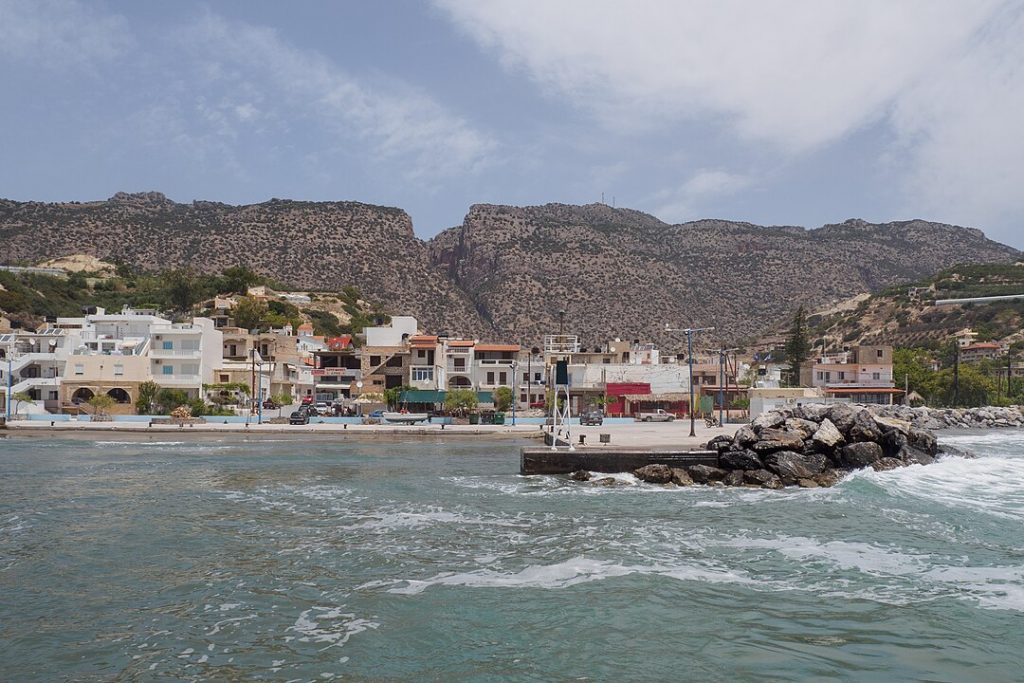
The area of Arvi is located on the southern coast of Crete, in the eastern part of the Heraklion Regional Unit. It is characterized by its warm climate, mainly because it is surrounded to the north by high mountains that act as windbreaks against the cold or cool northern winds. Combined with its coastal location, these features create a sheltered valley with a southern orientation. Due to its warm local climate, Arvi is one of Crete’s main agricultural regions, with thousands of acres covered by greenhouses that remain productive even during winter. The settlement has significant indoor‑cooling needs, sometimes for up to nine months of the year. Its extensive agricultural activity is the reason it maintains around 400 permanent residents, despite its relatively remote location.

The settlement’s proximity to the shoreline creates the conditions for installing an open‑loop geothermal exchange unit and a hydraulic district‑cooling network. The heat rejected from indoor air‑conditioning during the summer can be used to produce domestic hot water through decentralized heat‑recovery systems. The same geothermal exchanger can also be used to meet the settlement’s heating needs during winter. The proposed solution will lead to a 40–50% reduction in electricity consumption for heating and cooling among project participants, compared to the systems currently in use.

Moreover, the abundant available solar potential can be utilized for electricity generation through photovoltaic systems, offsetting the energy consumed by users. The reduction that project participants will see on their electricity bills will be around 70%, compared to the current situation.

Crete is the fifth largest island in the Mediterranean, both in terms of area and population. Given its pronounced morphology, it forms a mosaic of distinct geographical units with significantly different climatic conditions and, consequently, energy needs. At the same time, it combines high wind potential—especially along its mountain ridges—with high solar radiation, as is typically the case for all Aegean islands.

Thanks to its large size, Crete also has substantial biomass resources, originating both from agricultural and livestock activities and from urban organic waste. It has been estimated that by exploiting these biomass resources, the annual heat produced could be 2.4 times higher than the heat currently generated from oil for indoor space heating in Crete on a yearly basis

At the same time, the proximity of all coastal settlements to the sea—where most tourist activities take place—creates increased energy demands, a fact that favors the installation of open‑loop geothermal systems, especially for indoor cooling.

Thus, an effective and rational energy transition in Crete, aiming at achieving full energy independence, should be based on the development of a cluster of energy projects owned by local communities (community energy) and utilizing multiple renewable energy sources (solar and wind energy, geothermal energy, biomass, biogas, hydrogen).

Given its size, its high energy demands, and the different climatic conditions prevailing in coastal, mountainous, and lowland areas, Crete is considered an ideal setting for implementing innovative energy‑transition initiatives, such as the Renewable Energy Valley that will be developed within the framework of the “Crete Valley” project.

The aim of the project is to increase the production of green energy, diversify the energy supply, and reduce dependence on fossil fuels, thus contributing to the island’s green transition. The energy valley to be developed within “Crete Valley” can be seen as a decentralized system of renewable‑energy projects that will help Crete achieve greater energy autonomy, a more secure supply, and lower energy costs.

Beyond the core energy‑production and energy‑saving projects, the Cretan Renewable Energy Valley will seamlessly integrate innovative Information and Communication Technology systems, open digital solutions, social‑innovation processes, and robust business models.

A key feature of the project is the emphasis it places on the participation of the local population. The project considers that local communities should actively engage in energy‑transition initiatives, as a means of achieving both energy independence and energy democracy.

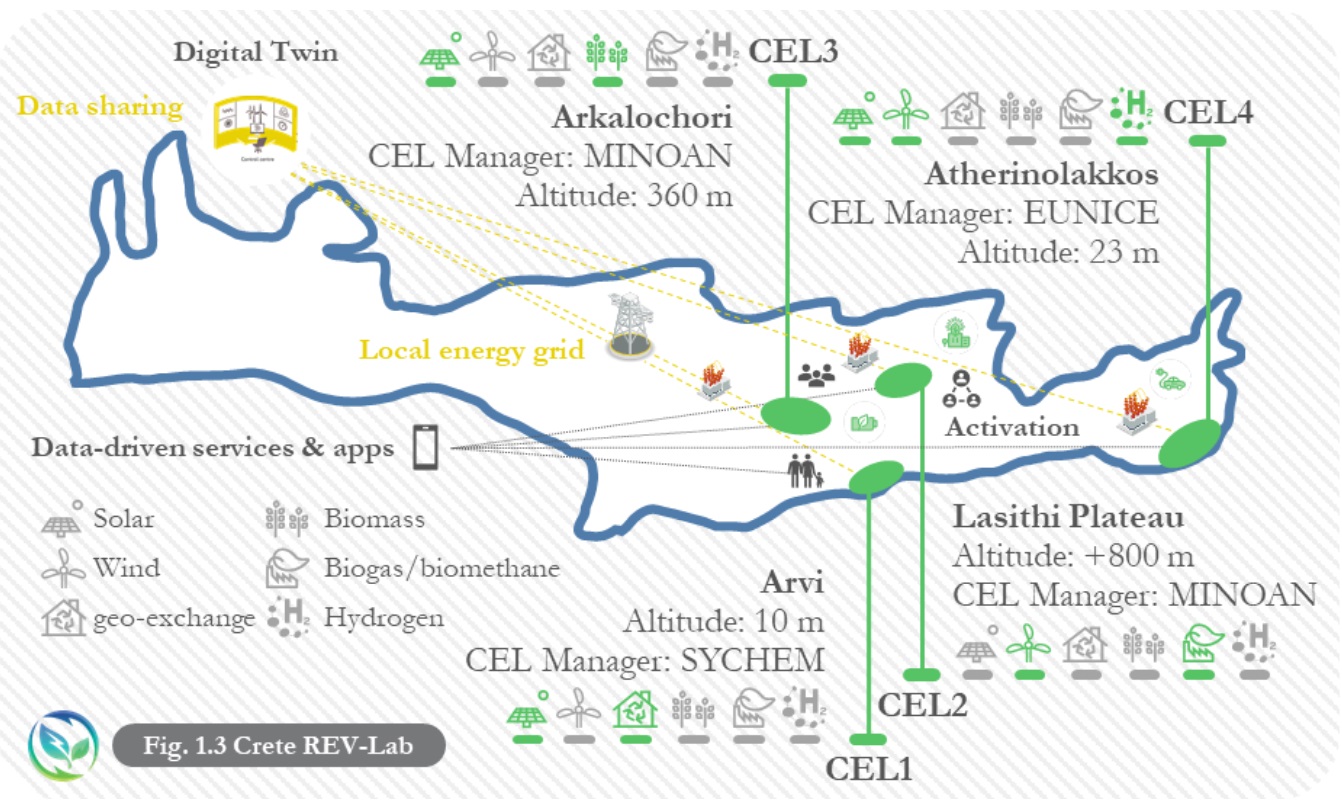
The project consortium consists of 41 partners from across Europe, coordinated by the Institute of Communication and Computer Systems of the National Technical University of Athens (ICCS). Minoan Energy, as a key beneficiary of the project, participates in the implementation of four community energy laboratories located in four different areas of Crete: Arvi, the Lasithi Plateau, Arkalochori, and Atherinolakkos. Each region utilizes a different mix of renewable energy sources (solar, wind, geothermal, biomass, biogas/biomethane, and hydrogen), depending on its specific geographical and climatic conditions, to meet its annual energy needs. The local communities that will benefit from the production and storage of the generated electrical and thermal energy will include approximately 150 commercial and industrial facilities and 175 households.
Projects in Arkalochori

The Municipality of Minoa Pediada is a lowland–semi‑mountainous municipality located in the center of the Heraklion Regional Unit. It is one of Crete’s most important agro‑urban areas, with numerous economic, social, and cultural activities. Arkalochori is the main urban center of the municipality, with a population of 5,000 permanent residents. The town offers all modern public and […]

Projects in the Lasithi Plateau

The Lasithi Plateau is one of Crete’s most distinctive landmarks, well‑known throughout the country, with significant historical, agricultural, economic, climatic, and folkloric importance. It is located in the mainland area of the Lasithi Regional Unit, in the middle of the Dikti mountain range, at an altitude of over 800 meters. Due to its mountainous location, the region is characterized by a cold climate, […]

Projects in Arvi

The area of Arvi is located on the southern coast of Crete, in the eastern part of the Heraklion Regional Unit. It is characterized by its warm climate, mainly because it is surrounded to the north by high mountains that act as windbreaks against the cold or cool northern winds. Combined with its coastal location, these features create a sheltered valley with a southern […]

Projects in Atherinolakkos

In Atherinolakkos, the green‑hydrogen valley being developed by the company EUNICE will have the capacity to produce 300–500 tons of hydrogen annually, using electricity from a nearby dedicated photovoltaic plant. The hydrogen produced will increase the available energy supply and meet the island’s heightened energy demand during the summer period. The surplus energy will […]

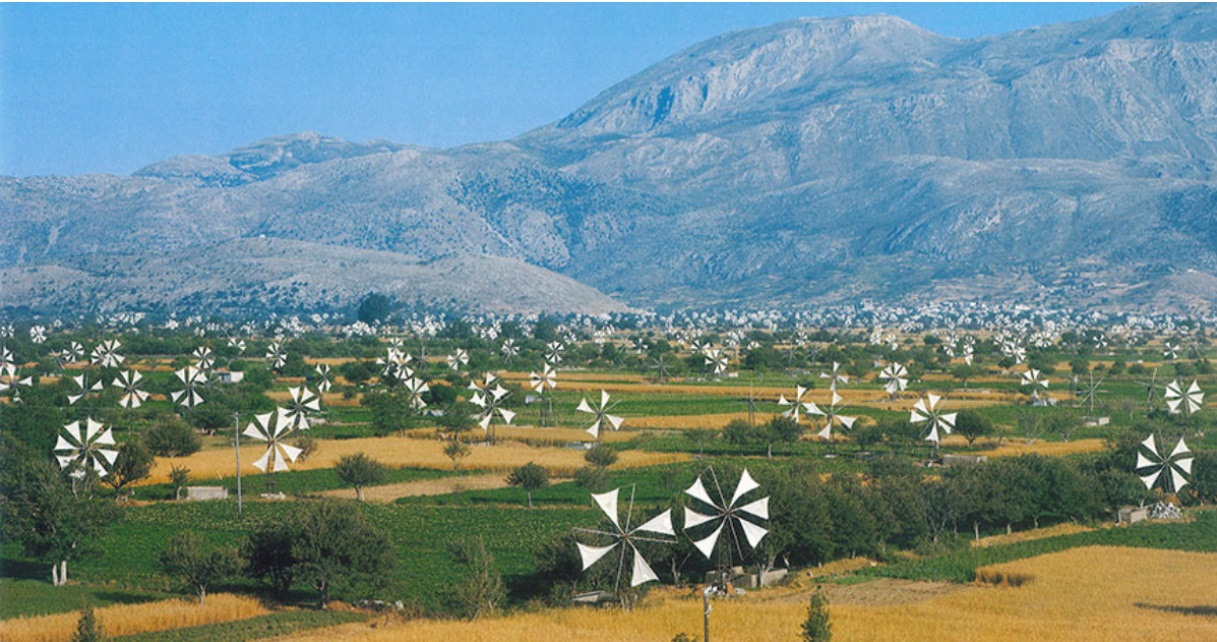
The Lasithi Plateau is one of Crete’s most distinctive landmarks, well‑known throughout Greece, with significant historical, agricultural, economic, climatic, and folkloric importance. It is located in the mainland area of the Lasithi Regional Unit, in the middle of the Dikti mountain range, at an altitude exceeding 800 meters. Due to its mountainous location, the region is characterized by a cold climate, with indoor heating required for nine months of the year. Each year, for a period that can last several weeks, the Plateau is completely covered in snow. Today it is home to approximately 2,400 permanent residents, who are engaged in agriculture, livestock farming, and tourism. The main energy need of the area is indoor heating.

Given the existing agricultural and livestock activities, the installation of a biogas production unit has been planned. It will include a reception area for liquid and solid organic waste, feeding stations, primary and secondary digesters, and a biogas storage facility. The organic waste that can be utilized includes cooking fats, bakery waste, animal manure, whey, alfalfa, and other animal feed. The biogas produced from these materials will supply a combined heat and power (CHP) system. The price of the heat provided to project participants will be set in a way that ensures the annual operation and maintenance of the unit. In any case, the heating cost for participants will be at least 50% lower compared to current oil‑based heating systems.

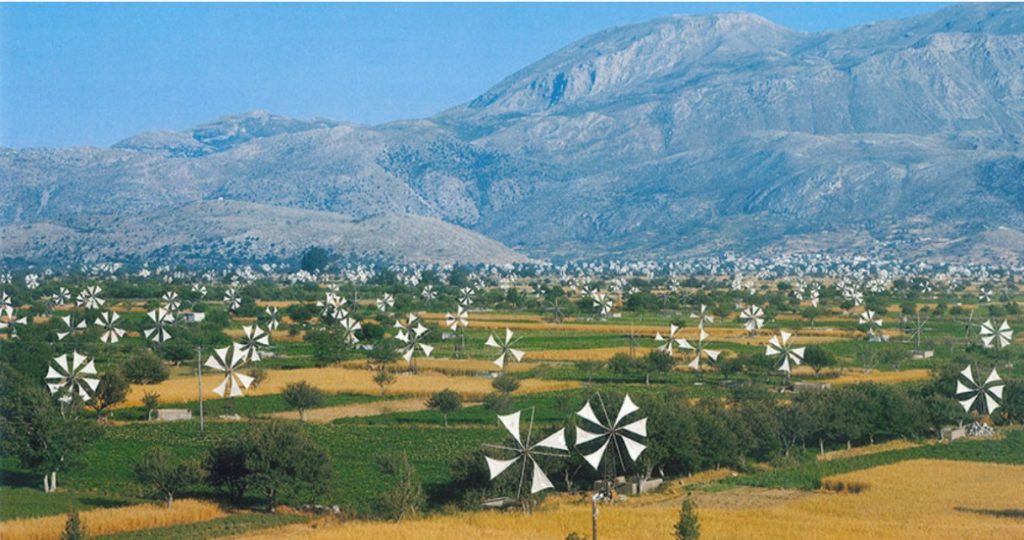
Additionally, fifty small electric windmills, each with a nominal capacity of 3 kW and designed in the style of the traditional windmill that is the trademark of Lasithi, will be installed for electricity production. It is worth noting that this modern version of the traditional windmill, adapted for electricity generation, is an innovation of the Hellenic Mediterranean University, with their design, construction, and maintenance supported by local scientists and engineers—adding further value to the project. The electricity produced by these electric windmills will be net‑metered against the consumption of participating households, reducing their electricity bills by up to 70%, just as in the case of Arvi.

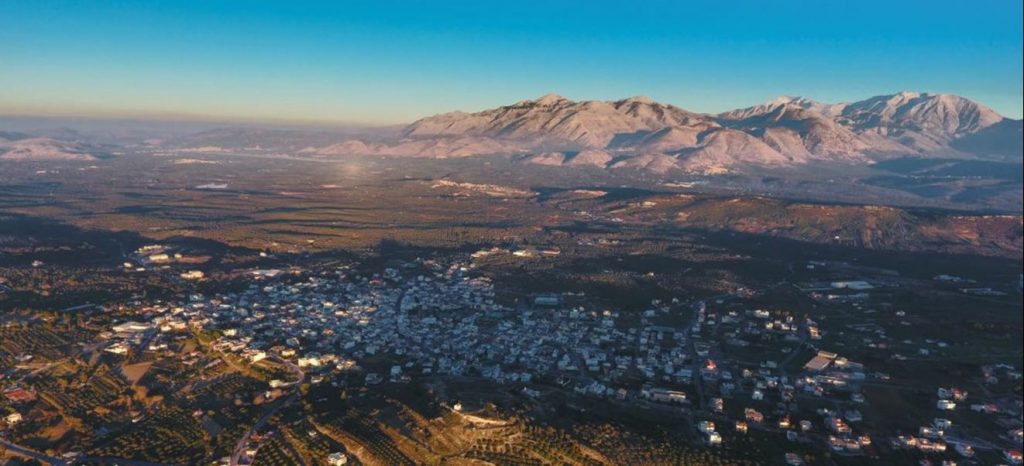
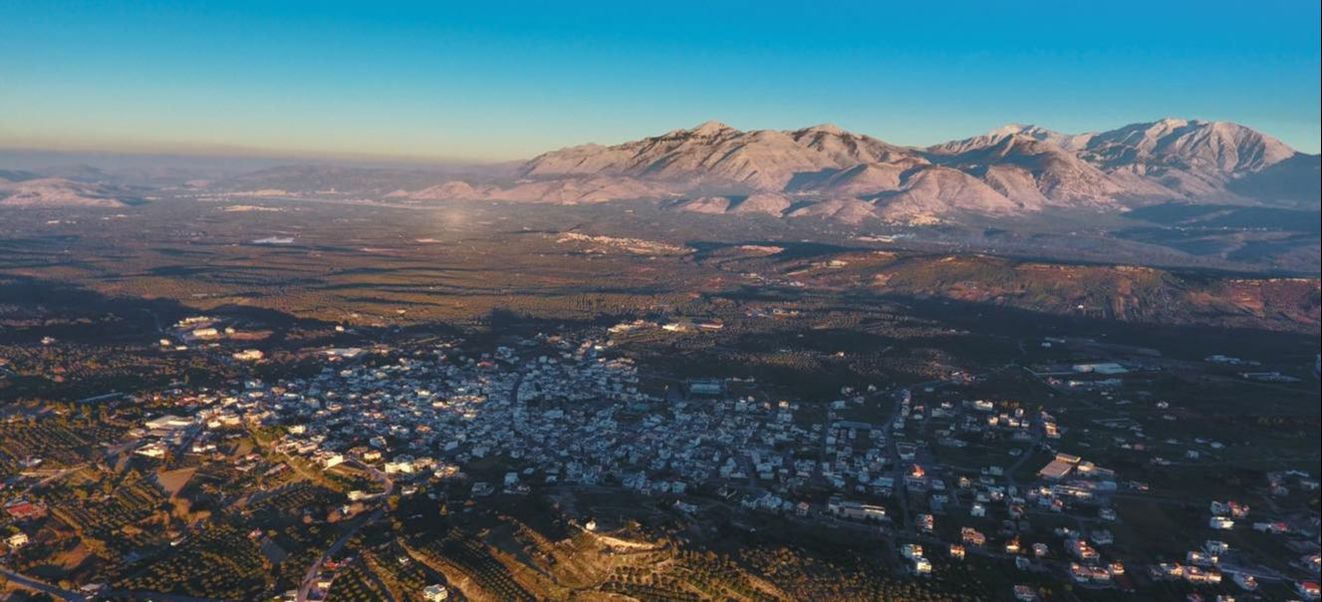
The Municipality of Minoa Pediada is a lowland–semi‑mountainous municipality located in the center of the Heraklion Regional Unit. It is one of the most important agro‑urban areas of Crete, with numerous economic, social, and cultural activities. Arkalochori is the municipality’s main urban center, with a permanent population of 5,000 residents. The town has all modern public and municipal facilities (schools, municipal administration buildings, an Olympic‑size swimming pool, an indoor sports center, an exhibition center, etc.), and its inhabitants are employed in a wide range of professional sectors: agriculture, livestock farming, commerce, tourism, and industry (olive mills, wineries, carpentry workshops, and more). With an average altitude of 360 meters, the town has significant needs for both heating and cooling. There are abundant solid‑biomass resources, mainly originating from olive‑tree pruning.

The project foresees the creation of a biomass plant that will primarily use olive‑tree prunings, estimated at 20,000 tons per year. These prunings will feed a biomass boiler capable of producing up to 1.6 MWth of thermal energy. The district‑heating network to be installed will provide heating to households, municipal buildings, and commercial businesses at a significantly reduced cost compared to the current practice of using oil. It is worth noting that the municipal swimming pool will be heated by the new proposed unit, eliminating the current annual cost of €250,000 for heating it with oil.

It is also planned to install, near the town, a small number of up to two wind turbines, each with a nominal capacity of 60 kW. The proposed action can be further strengthened through decentralized electricity generation from PV systems. Electricity production from photovoltaics, combined with the installation of decentralized storage systems (batteries), will lead to reductions of around 70% in the electricity bills of the project’s participants.

If you are interested in learning more or in participating in the district‑heating project taking place in Arkalochori, you can fill in the expression‑of‑interest form located here

Posts pagination

en_GBEnglish (UK)